Stewardship
Sustainability Report 2024
Contents
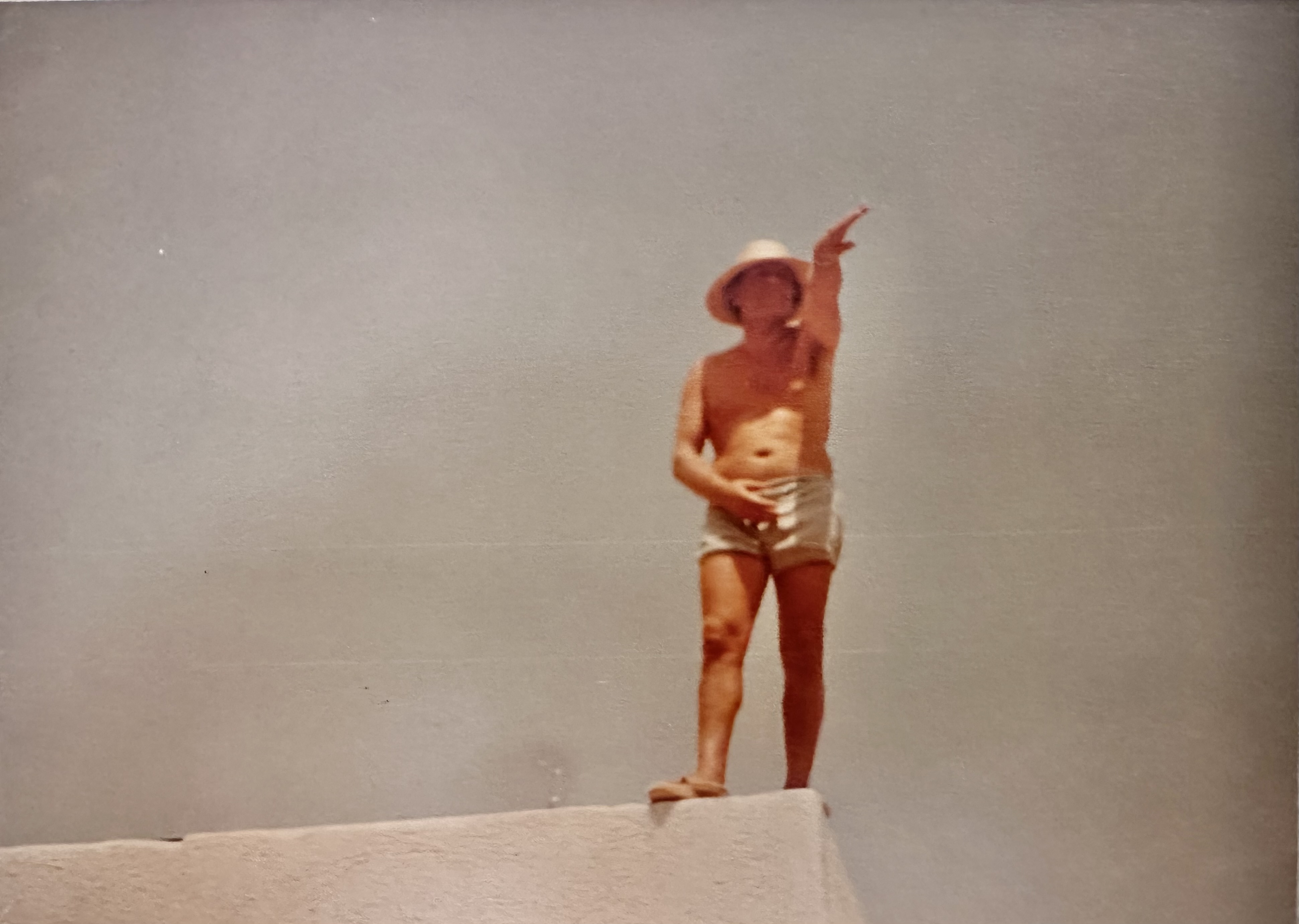
Spyros Kokotos, architect, on-site 1981.
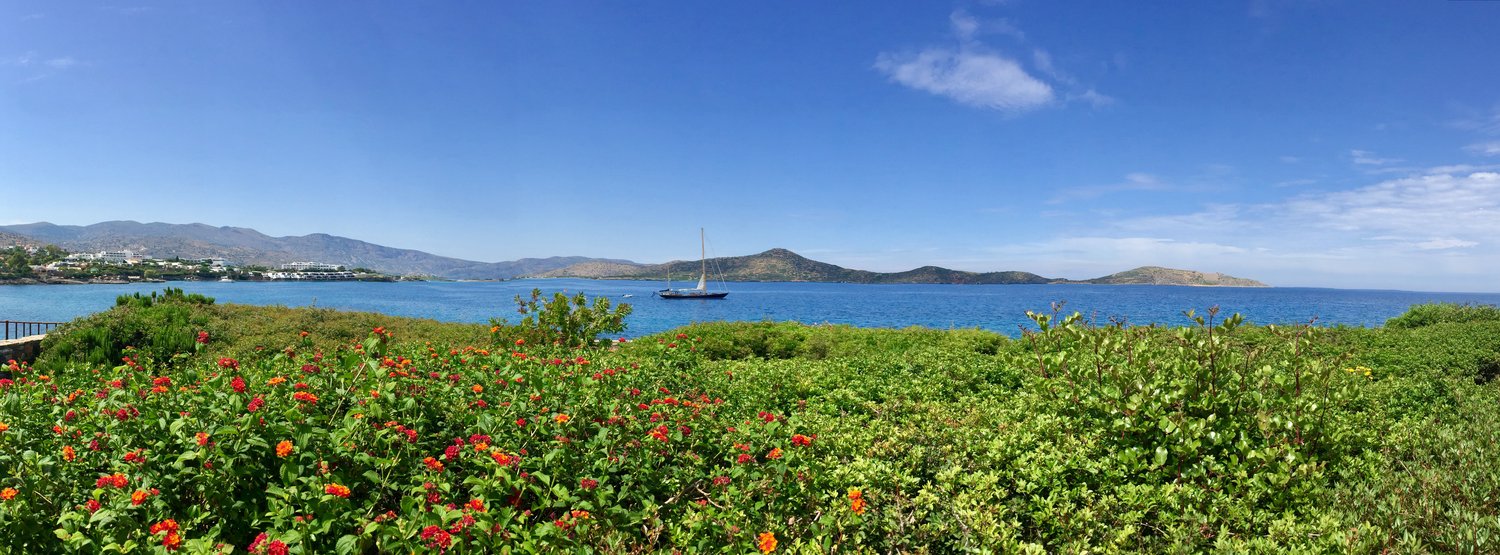
From the terrace at Elounda Mare, the gulf is as it was when we set the first foundations there in 1982; the same light on the same water, the same arm of land curving north towards Spinalonga. What has changed is everything we have built between then and now.
My husband Spyros and I began our work in Elounda in the early nineteen-seventies, and he kept designing for this coastline until last September, when he passed away. The buildings he made were always conversations with this place — with its weather, its stone, its light. He understood, before sustainability had a vocabulary, that a building working with its climate is a building that lasts.
Our three properties, Elounda Mare Hotel, Porto Elounda Golf & Spa Resort, and Elounda Peninsula Luxury Resort, are tended every year by many hundreds of people, in the summers of operation and the winters of construction. Many of them have been with us for decades. We produce the water we use from the sea. We treat what we return, and use it to keep our gardens. We divert almost everything we discard from landfill, and we have begun the longer work of reducing what we emit.
In May 2024, the Spyros and Eliana Kokotos Foundation inaugurated the Museum of Cretan Folk Art at the Varouhas Estate in Dafnes, our family's ancestral village in Heraklion, a permanent home for the textiles, ceramics, woodwork and tools of the island we love. It was the last project Spyros and I saw through together, and it is, in its way, the same project as the resorts: the careful keeping of a place.
This is the first report of its kind that we have written for the public. It contains the work, and the numbers behind it, and it sets out what we are committing to do in the years ahead. I sign it not because the work is done, but because I want our guests, our partners, and the people of Crete to see what we are tending — and to hold us to it.
ΤΟΥΡΙΣΤΙΚΕΣ ΚΑΙ ΞΕΝΟΔΟΧΕΙΑΚΕΣ ΕΠΙΧΕΙΡΗΣΕΙΣ ΕΛΟΥΝΤΑ ΑΕ
Right page · full bleedPortrait of Eliana, or — preferred — a quiet detail image: her hands on a familiar railing, the view from a terrace she knows by heart, a loggia at first light. The portrait should not perform authority; it should imply long acquaintance with the place.
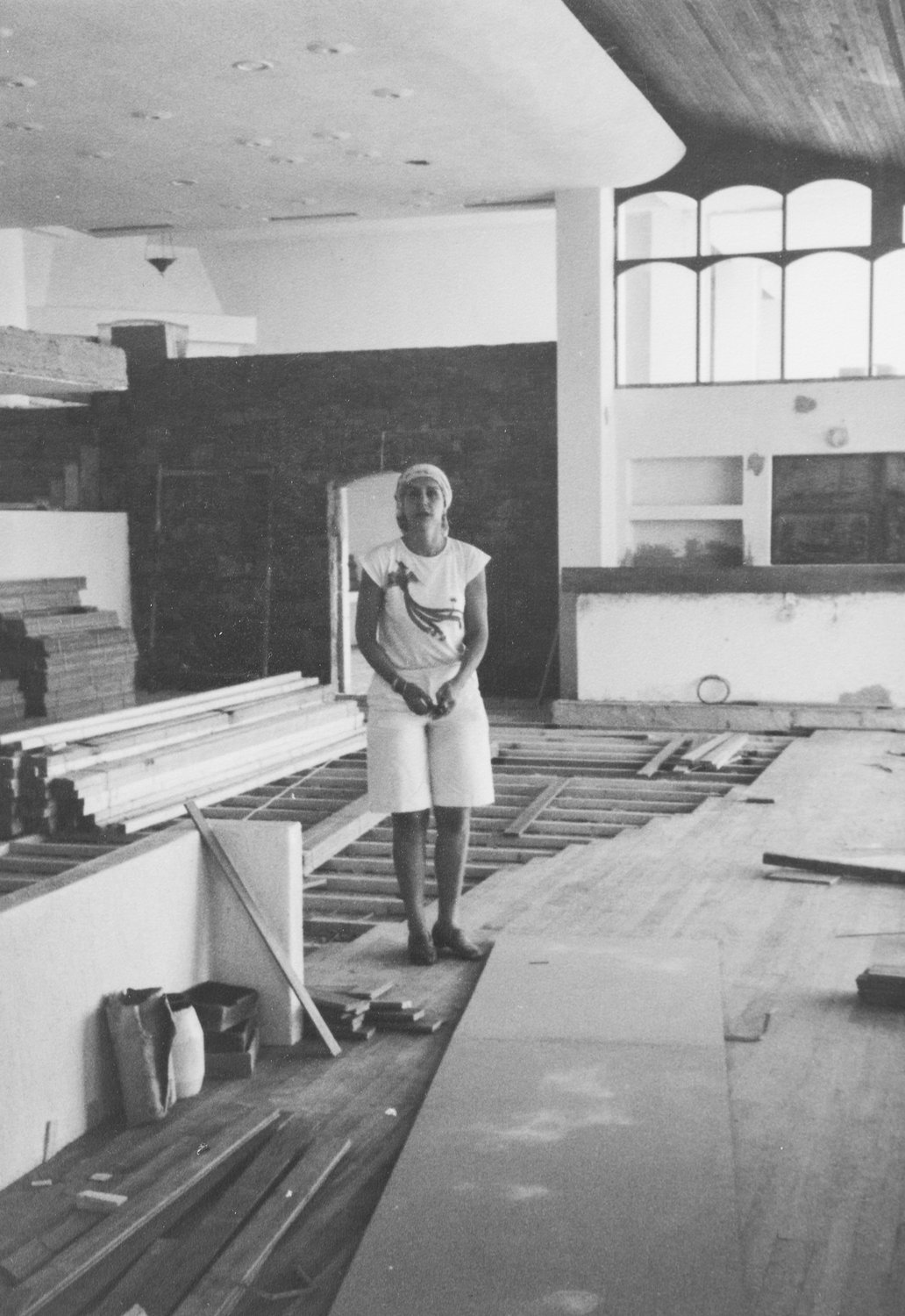
Eliana Kokotou at the Elounda Mare reception, 1982.
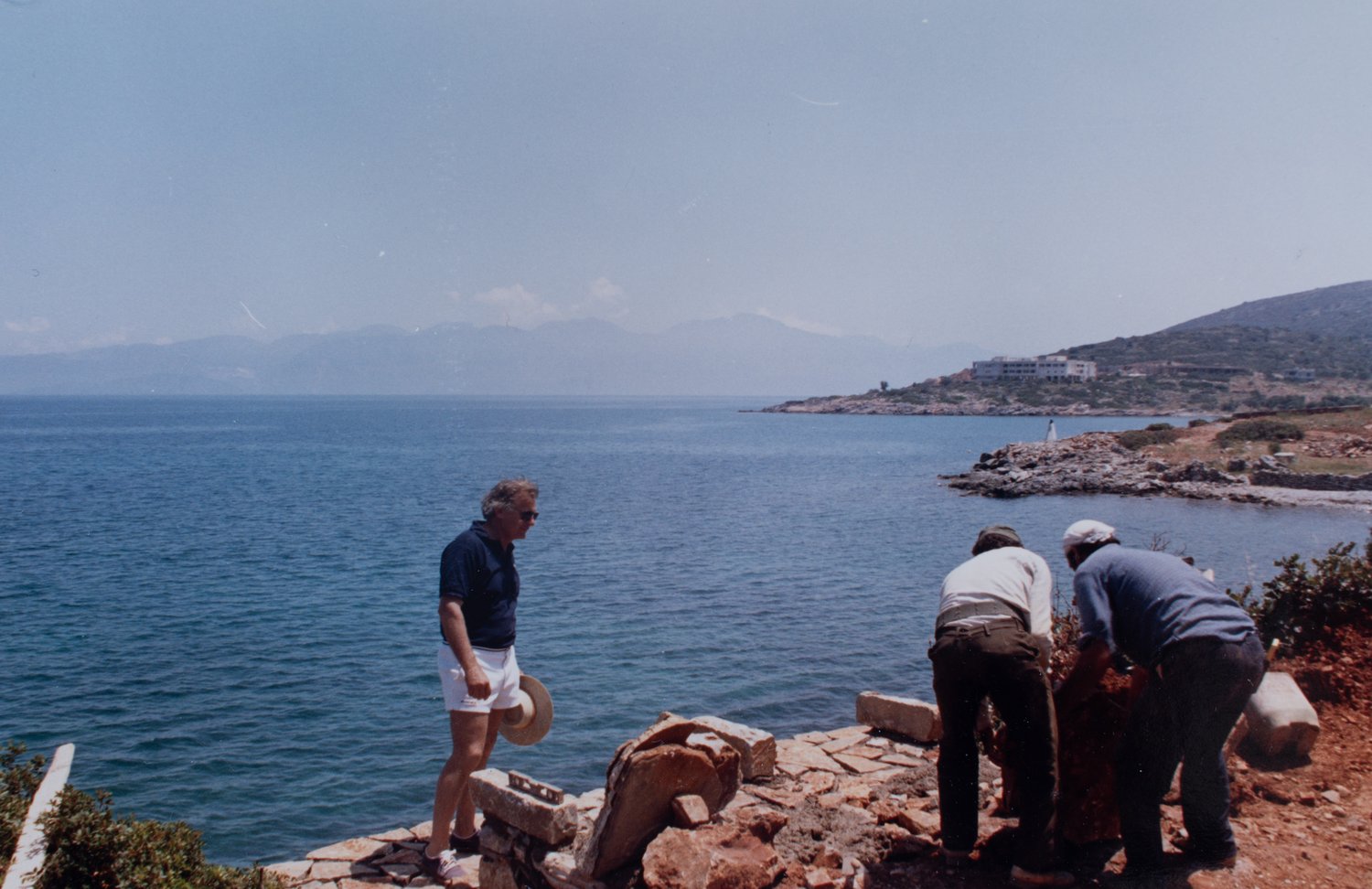
Heritage opener · left columnSpyros at the edge of a small cliff at Mare, hat in hand, giving orders to two masons hand-building a stone wall. Mirabello gulf behind. Archival, c. 1981–1982.
Of this place
The road to Elounda traces the curve of the Mirabello shoreline, where the mountains ease into the sea and the light sharpens. For travellers arriving from Heraklion, the journey gives the eye time to adjust to the scale of the place: a broad gulf protected by the long arm of the Spinalonga peninsula, salt pans worked since Venetian times, the small harbour of Plaka, the white village above. Beneath the causeway lies what remains of Olous, an ancient city that slipped under the water two thousand years ago.
The salt pans, abandoned commercially in 1972, are now one of the eastern Mediterranean's significant stopover habitats for migratory birds; Red-backed Shrike, Common Kingfisher, Eurasian Hoopoe, Curlew Sandpiper, sometimes hundreds of birds passing through in a single autumn week. Spinalonga itself, the small island visible from every one of our properties, has been a designated archaeological site since 1976; it is the second most-visited monument in Crete, and is on the UNESCO World Heritage tentative list.
This is the geography that decided everything. The orientation of the buildings, the materials used in their construction, the water that runs through them, the food served at their tables, and the rhythms of the seasons that govern the work; all of it follows from this coastline.
Right page · full bleedContemporary landscape photograph. Strongest candidates: the Elounda salt pans seen from above at first or last light, with Spinalonga in the distance; or the gulf seen from one of the property terraces, early morning, no people. Muted grading.
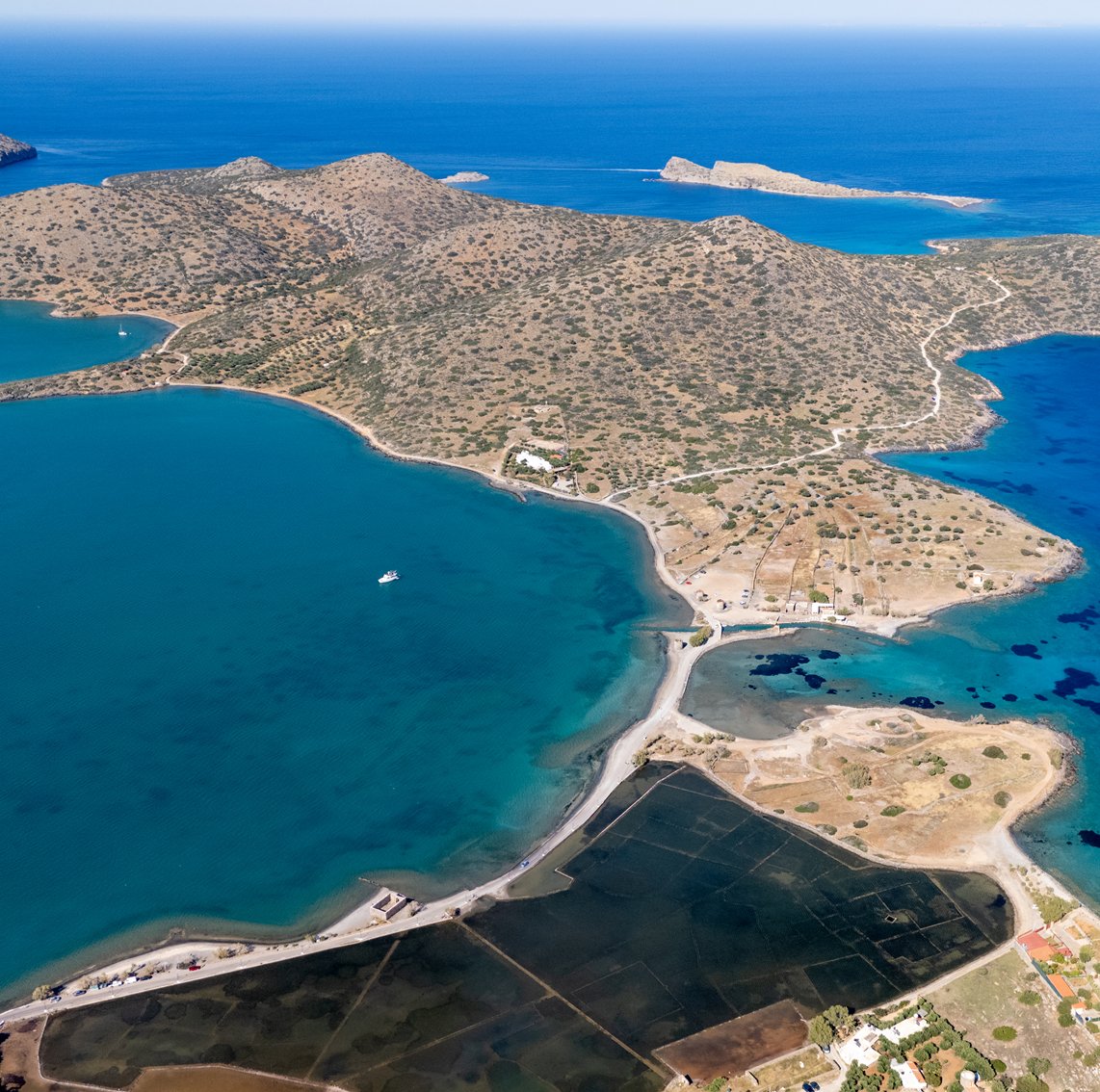
The Gulf of Mirabello and the salt pans of Elounda, looking north toward Spinalonga.
A vision built
Spyros and Eliana Kokotos had been building hotels in Elounda for a decade by the time they laid the foundations of Elounda Mare. Their work on this coastline began in the early nineteen-seventies, when the gulf was still mostly farmland and salt pans, and the road from Heraklion was a slower drive. By 1982, when Mare opened its doors, they knew the place — its weather, its labour, its stone — better than almost anyone.
Spyros, an architect by training, brought to Elounda a long study of Aegean vernacular form: the low stone houses, the courtyards, the thresholds between inside and outside that Cretan builders had refined over centuries. He designed Mare and, later, Porto Elounda in 1992 and Elounda Peninsula in 2002 to settle into the coast rather than to assert against it. Low profiles. White walls. Terraces stepped down to the water. Rooms oriented to the prevailing breezes and the morning light.
Eliana built them with him. While Spyros designed, she ran the construction sites and, when a property opened, the company that grew around it. Their working partnership has been seasonal for more than four decades; summers for operation, winters for construction and renewal, and it has never stopped. Even now, the winter rhythm continues: a wing renovated, a system replaced, a courtyard re-worked, every closed season since 1982.
Three children grew up inside that rhythm. Marina, Ilias, and Fotis are today the working continuation of the company their parents built.
Right page · archivalBlack-and-white archival. First choice: dual portrait of Spyros and Eliana from the founding decades — on site, working clothes, building behind. Alternative: two stacked images, Spyros at the drafting table and Eliana on a construction site or in a hotel interior.
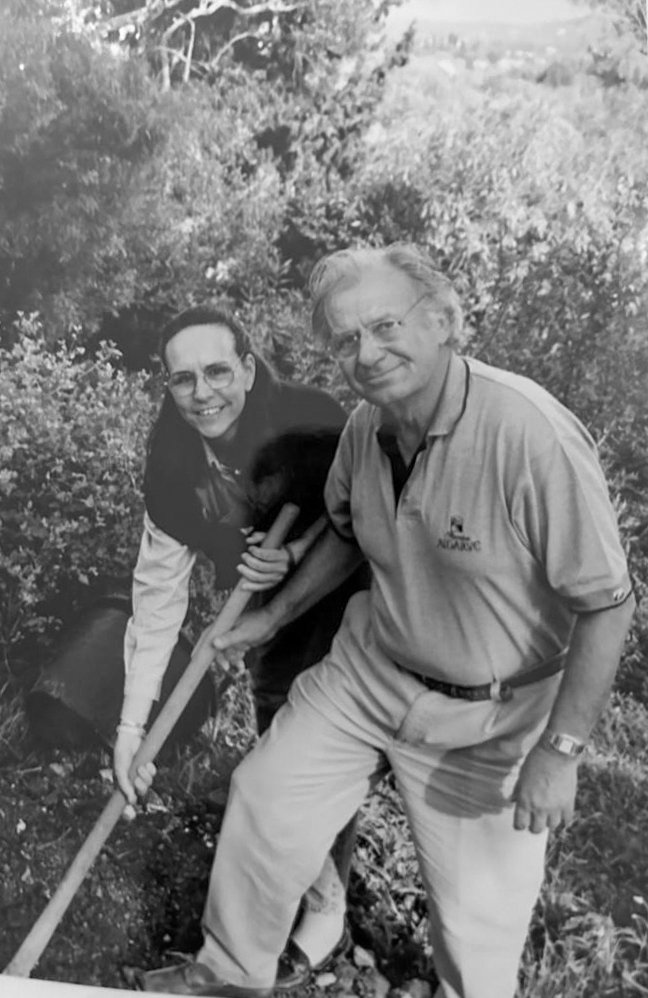
Spyros and Eliana Kokotos.
A philosophy
in stone
There is a pattern in the buildings that becomes visible only when you have stayed in them. Rooms are oriented so that the morning light enters but the afternoon heat does not. Stone walls absorb the day's warmth and release it slowly into the cool of the night. Loggias and pergolas extend the indoor rooms outward into the shade. Cross-ventilation is designed in, not retrofitted.
Spyros's architecture was, by training and by inclination, a vernacular architecture. He had studied at the National Technical University of Athens under Dimitris Pikionis, whose landscaping of the Acropolis pathways in the 1950s remains one of the most important works of twentieth-century Greek design, and Pikionis's influence is legible across all three properties. From his teacher Spyros took the discipline of assembling fragments: composing buildings from salvaged stone, reclaimed marble, vernacular forms and local craft, in conversation with the place rather than against it.
In the entry courtyard at Elounda Mare, that philosophy is set out in plain sight: an entire wall built from ancient marble fragments spanning all the periods of Cretan history — Minoan, Classical, Byzantine, Venetian, Ottoman — composed as a single continuous surface. Throughout all three properties, Spyros worked with original stone architraves rescued from dilapidated buildings across the Elounda area, integrating them into walls, doorways and thresholds where their second life could continue.
The materials and the labour came from the island. Elounda has been internationally known for its whetstones (ακόνες) for centuries, a craft that has, in turn, sustained an unusually deep tradition of stone masonry in the local population. When the first hotels were built here in the nineteen-seventies, that craft was the one resource in abundance. The stone walls of the three Collection properties were built by hands that had been trained on whetstones, doorsteps and field walls.
What this all amounts to is a building stock that was already pulling in the right direction before any of those metrics existed. The decisions Spyros made on a drafting table in the early eighties now read, four decades later, as decarbonisation by another name. This was not accidental. It was the discipline of an architect who understood that a building working with its climate is a building that lasts.
Right page · architectural detailStrongest options: (a) the marble-fragments wall at the entry courtyard of Elounda Mare, photographed in raking morning light — the single most distinctive Pikionis-inspired element in the Collection; (b) one of Spyros's original sketches or elevations; (c) a salvaged stone architrave in situ.
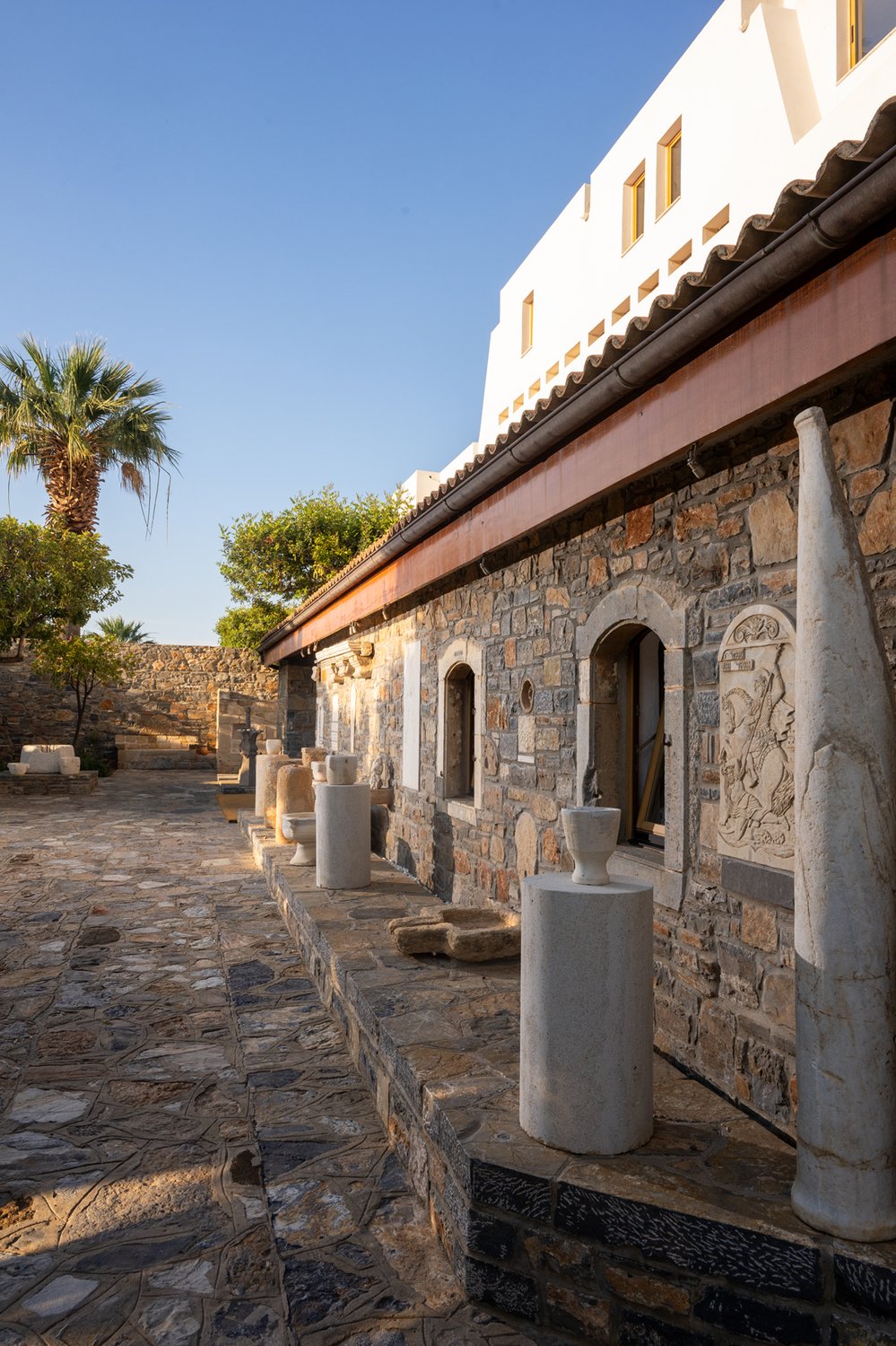
The wall of marble fragments, Elounda Mare entry courtyard. Pieces span the Minoan through Ottoman periods of Cretan history, composed by Spyros Kokotos in the manner of Dimitris Pikionis.
I was just a mason when I came to Elounda in the 1990s and only really learned my craft by working with Spyros Kokotos, a true master of the stone. We didn't just build walls and arches and sculptures for him; I believe it in my heart that this was art we were creating, and it was meant to mark the land for generations to come. Spyros was much more than an architect; he was a visionary that left an indelible mark on Elounda and its people.
Dafnes,
the Estate,
the Foundation
Some of the most distinctive things made in Crete over the past several centuries — the textiles, the ceramics, the woodwork, the everyday tools of mountain villages and coastal towns — sit increasingly outside the rhythms of contemporary life. They are remembered, but they are not lived with anymore. The objects survive in attics, in private collections, in fragments.
The village of Dafnes lies in the foothills south of Heraklion, in one of the oldest continuously cultivated wine landscapes in Europe; its vineyards have produced wine of designated origin since 1971, and its slopes have produced wine for far longer than that. Dafnes is the ancestral village of the Spyros Kokotos family. At its centre stands the Varouhas Estate, the early-twentieth-century medical practice and stable of Dr. Georgios Varouhas, a physician and deputy of the Cretan State in the years before Crete's unification with Greece. The buildings, of neoclassical Cretan design, are listed and protected.
In May 2024, the family inaugurated the Museum of Cretan Folk Art at the Varouhas Estate. A month later, on Tuesday, 11 June 2024, the Spyros and Eliana Kokotos Foundation was formally established by Presidential Decree, completing the legal framework that would carry the Museum and its programmes forward. The Estate, some 4,655 square metres of restored built property, was endowed in full to the Foundation by Elounda SA, together with a founding capital sum, in an act of irrevocable dedication to public benefit.
The Museum houses the Spyros and Eliana Kokotos Collection, gathered over their lifetime together: traditional Cretan weavings, embroidery, rugs and kilims; Byzantine and post-Byzantine icons; carved wooden chests, some bearing the work of celebrated Greek naïf painters; Minoan-era amphorae and clay seals; objects from every period of the island's history spanning millennia.
Spyros and Eliana attended the opening together. Spyros passed away on 2 September 2025, at the age of ninety-two. The Museum was the last project he and Eliana saw through together; it is, by his own description, of a piece with the resorts; the same long act of careful keeping, applied to a different layer of the same place.
The Foundation's purposes, as constituted, are the conservation and promotion of the Estate as an exemplary specimen of early-twentieth-century neoclassical Cretan architecture, and the dissemination of Cretan folk art and its place in the island's cultural tradition.
Right page · Estate or MuseumStrongest options: (a) exterior view of the Varouhas Estate buildings in Dafnes; (b) interior of the Museum showing scale, light and a representative range of objects; (c) a defining single object — a loom in raking light, a textile under glass, a Minoan amphora.
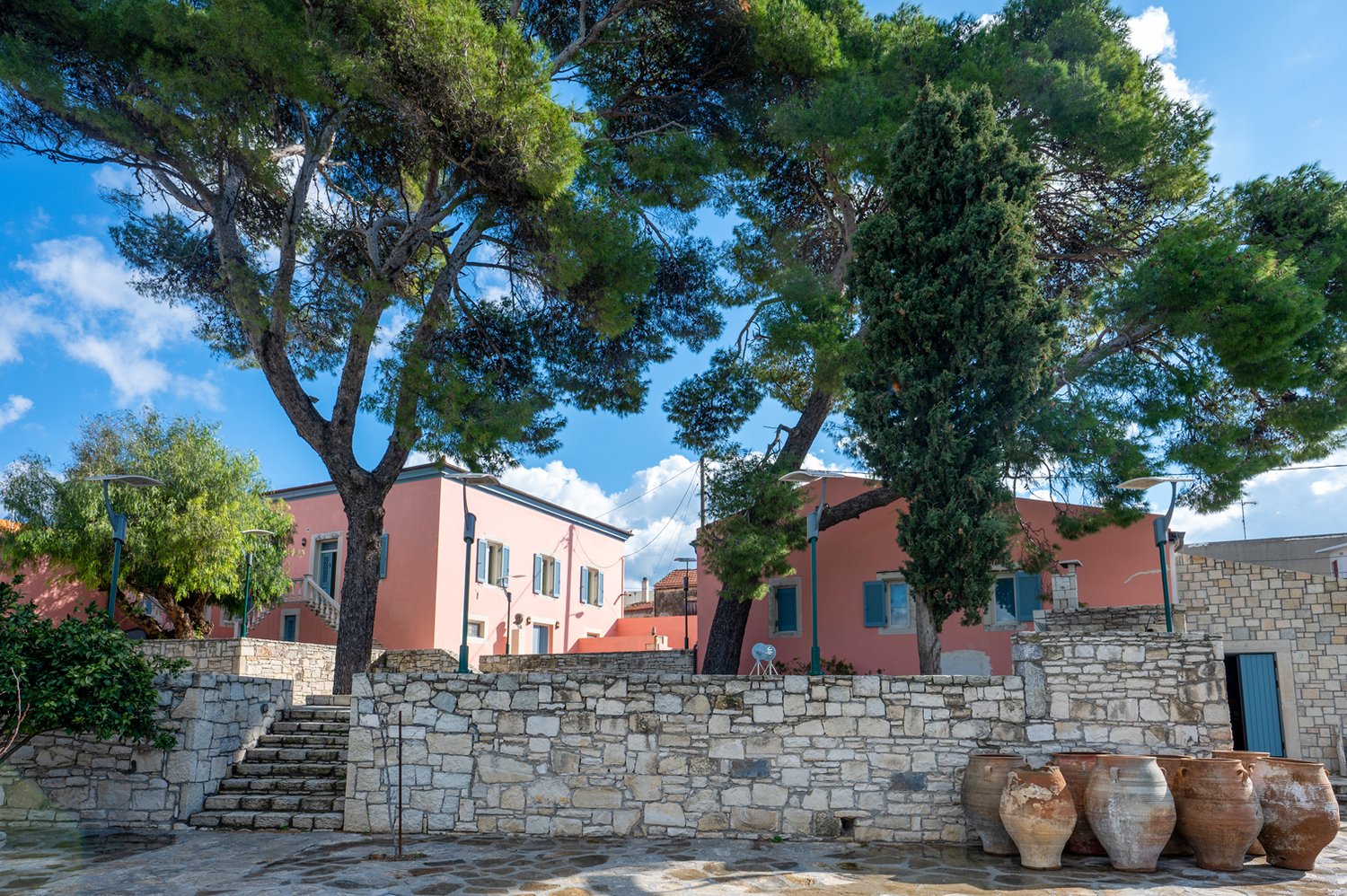
The Varouhas Estate, Dafnes, Heraklion. The early-twentieth-century medical practice of Dr. Georgios Varouhas, restored as the home of the Museum of Cretan Folk Art, May 2024.
Spyros Kokotos created, under his own personal supervision, buildings that are not imposing in scale, but buildings whose every corner proclaims the civilisation of Crete and the glory of our ancient and Byzantine tradition… His manifest works, his silent philanthropy, and the two resplendent holy chapels he raised — that of the Prophet Elias the Tishbite and that of Saint Marina — bear witness to his love and reverence for the Church within the very precincts of hospitality.
Spread 7 · second image — interior of the MuseumThe antiquities room at the Museum of Cretan Folk Art, Varouhas Estate. Hanging amphorae and salvaged stone elements arranged against dark stone walls; the polished black floor reflects them. Reinforces the body's reference to Minoan-era amphorae and clay seals.
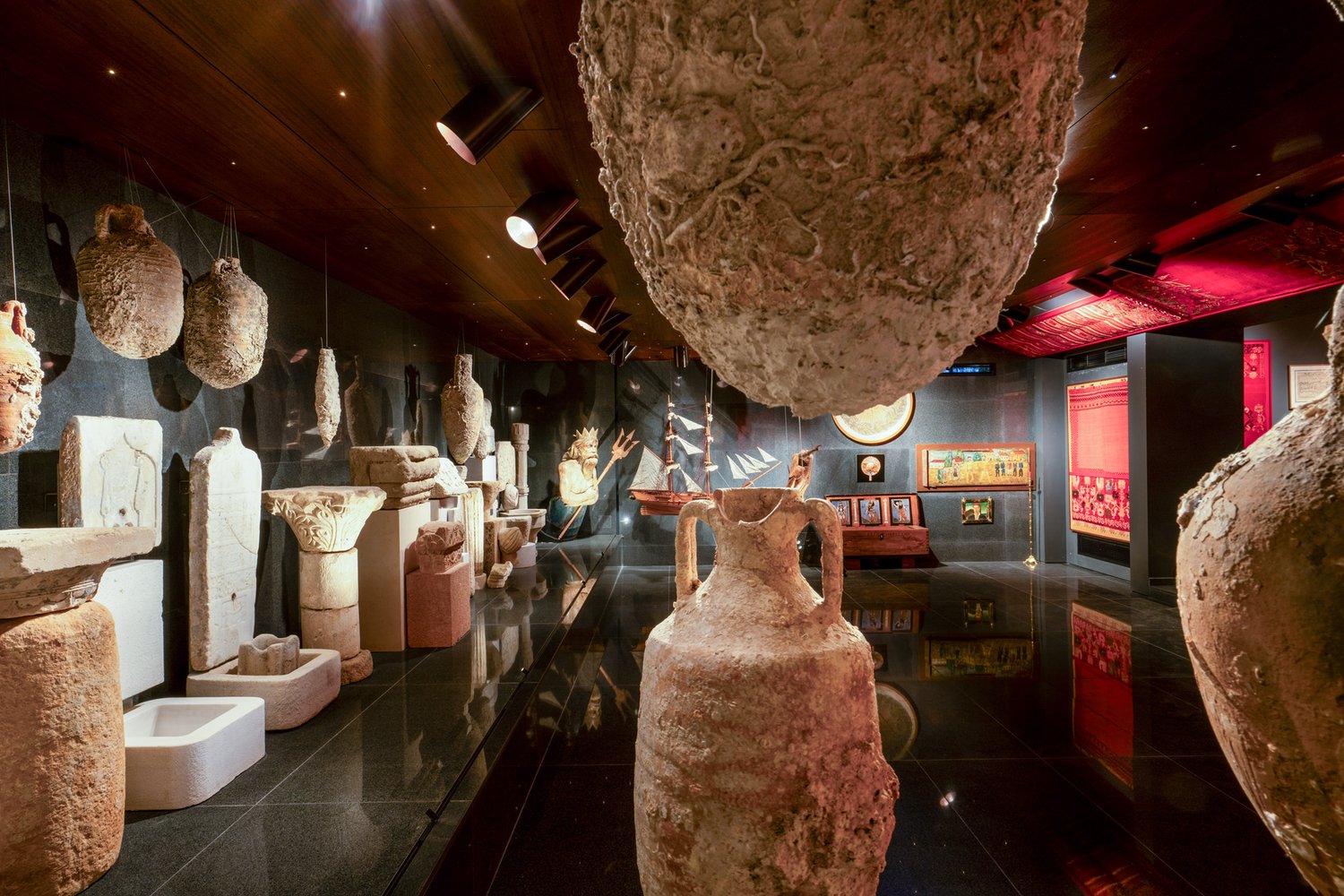
Inside the Museum of Cretan Folk Art at the Varouhas Estate, Dafnes. The antiquities room.
A family at work
The Company today is run as a working family business in a way the Greek tourism industry has largely moved away from. Eliana Kokotou serves as President of the Board. Her three children hold operational and strategic roles across the Collection: Marina is a hotel operator, Ilias is a marketeer, Fotis is an engineer. Working as a team. The company has not been listed, sold, or partly divested. The capital is patient, because the owners are also the operators.
This continuity is, in itself, a sustainability fact. The horizon over which decisions are evaluated is multi-decade rather than quarterly. Investments in building envelopes, in desalination capacity, in renewable generation, in staff continuity — investments that pay back over years or decades — are easier to make when the owner is the same family who will be running the property in 2040 as in 2025.
The same logic extends to the people who work alongside the family. The Collection works with many hundreds each year, in the summers of operation and the winters of construction, and several of those who appear by name in the pages that follow have been with the Company since the day their property opened; at reception, behind the bar, on the water, in the kitchens, in the workshops. Continuity is, here, both a value and a competitive advantage.
The family's contribution to the work of Greek tourism extends, as it has for decades, beyond the boundary of the Collection. On 31 October 1991, the founding meeting of SETE, the Greek Tourism Confederation, was held at Elounda Mare. Spyros became its first President, a role he held with distinction, and remained its Honorary President until his death. Elounda Mare is, in Greek tourism, more than a hotel; it is the room where the industry first agreed to speak with one voice.
What follows is a report on what is being tended now, and what comes next.
Right page · full bleedStrongest options: (a) current portrait of Eliana with her three children at one of the properties — composed, restrained, not stiff; (b) working portrait of Eliana alone implying the Company; (c) wider photograph of the leadership team and a representative group of long-tenured staff at one of the properties.
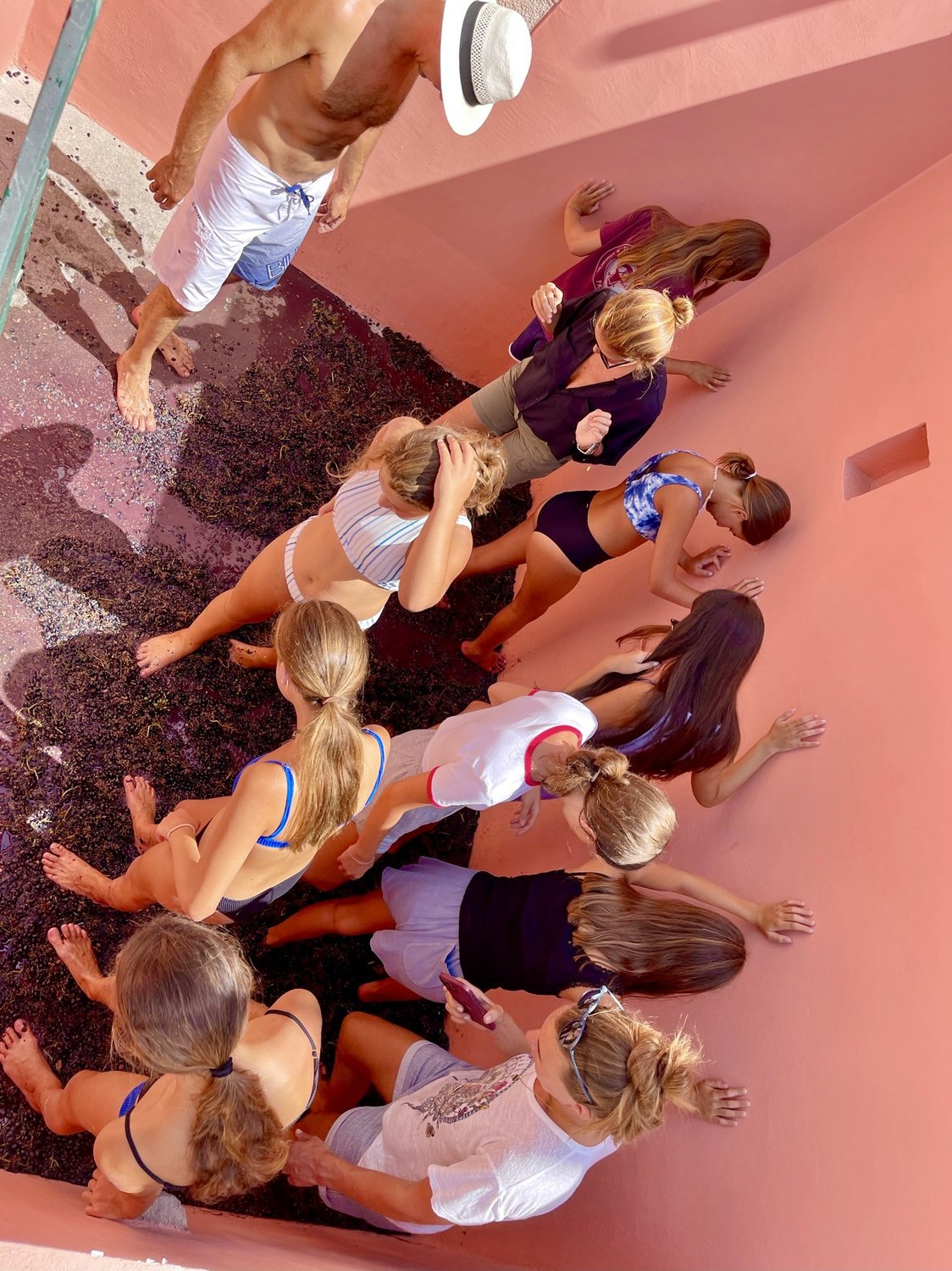
The entire family — grandparents, parents and children — at the annual pressing of the grapes in Dafnes, a ritual of collective effort for our common purpose.
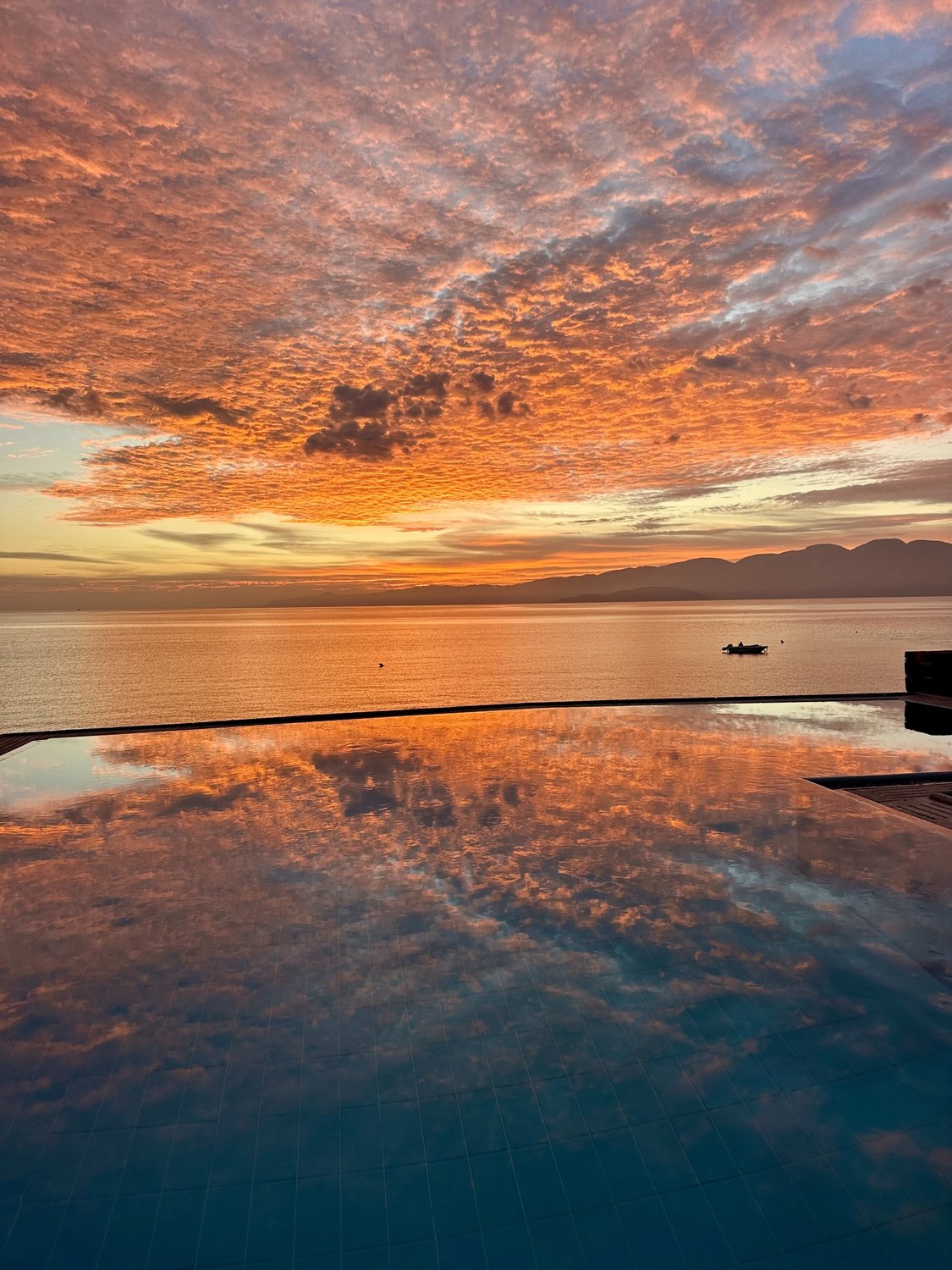
Left page · full bleedEstablishes "now." Strongest options: (a) early morning at one of the properties — light just arriving on water and stone, no people yet; (b) a working detail from operations — a desalination control panel, a kitchen prep counter at first light, a corridor at season open; (c) the gulf at first light, in present-tense colour rather than archival black-and-white.
Where we stand, 2024
Essential figures from the 2024 reporting year, across the three properties of the Elounda Collection.
Mare main · Chapel of Santa MarinaThe chapel restored — its iconostases from Byzantine churches, marble fragments worked into the walls, the Greek flag flying from the bell tower. The architectural callout for Mare in plain view.
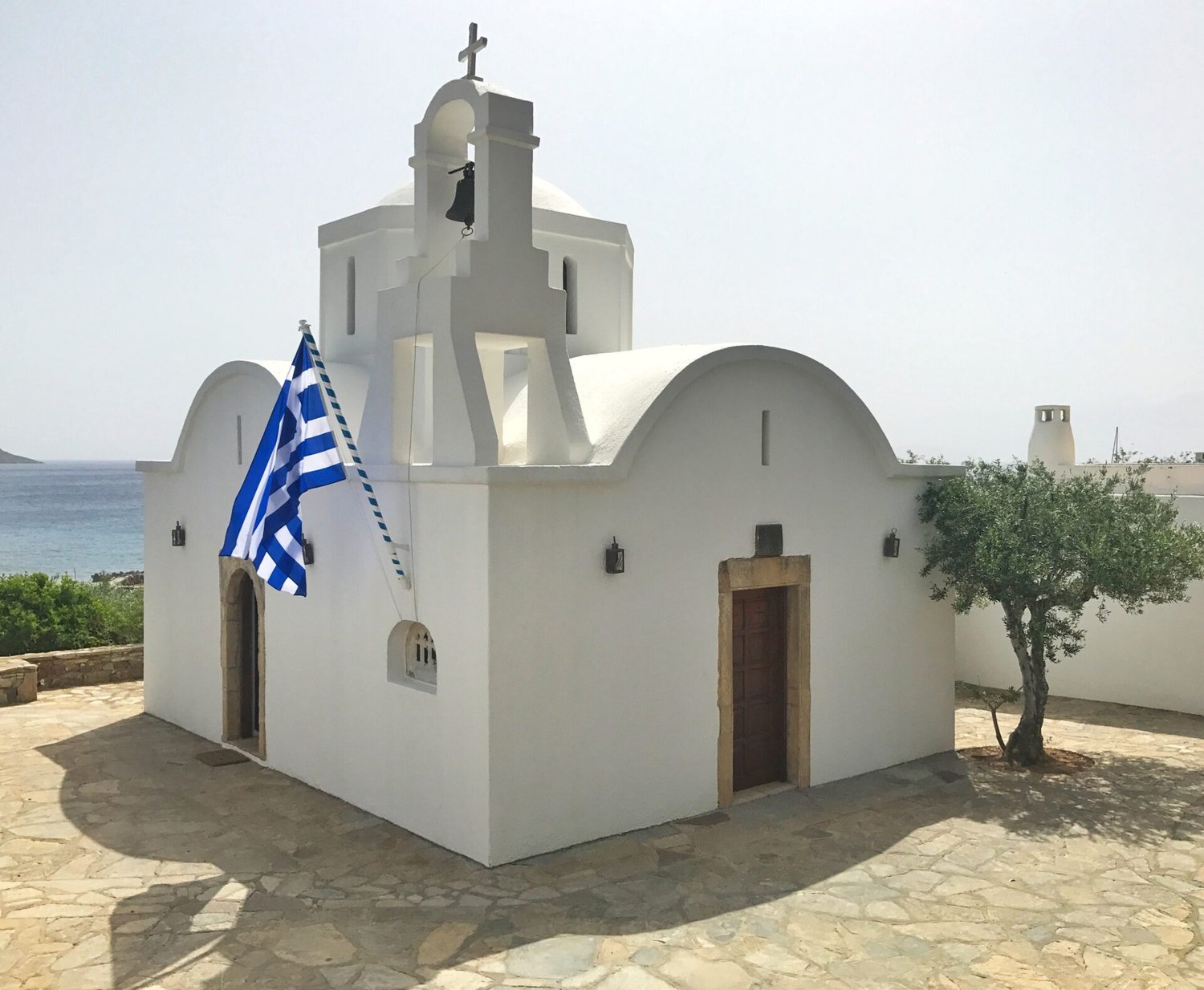
The Chapel of Santa Marina, Elounda Mare.
Inset · archivalBungalows 26–30 in foundation, 1983. From the family archive. Used small here per Fotis's note that an archival phone-photo will never match a contemporary professional shot at full size.
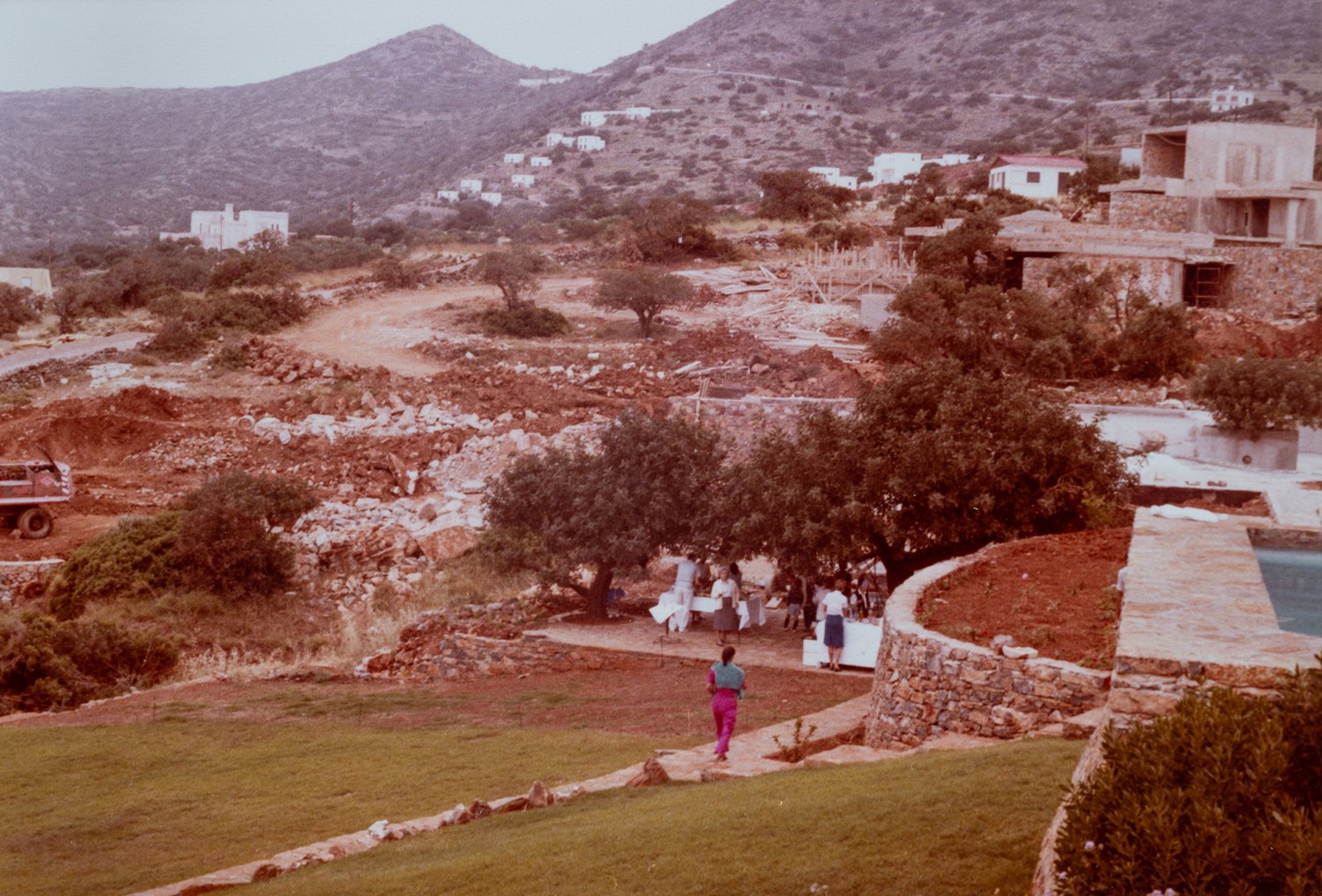
Mare under construction, 1983. From the family archive.
Elounda Mare
Hotel
Since 1982
Elounda Mare opened to its first guests in the summer of 1982, on the stretch of coast where Spyros and Eliana had been working for a decade already. Of the three Collection properties it is the smallest in unit count — eighty-seven rooms and bungalows scattered across landscaped terraces stepping down to the water — and the only one to belong to Relais & Châteaux. The scale was deliberate. Spyros designed Mare as a place that would hold its character through a return visit and a fortieth-anniversary stay. Its bungalows were modelled on the single-storey stone houses of the inland villages, and when work began on them in the early eighties, original architraves rescued from dilapidated buildings around Elounda were given a second life in their walls and doorways.
Today Mare is run by Marina Kokotou, who has overseen the property and its food and beverage operations for many years; extending, in her own register, the working partnership between her parents that built it.
Mare reports its operating emissions separately from the other two properties. In 2024 it produced almost all of its own freshwater from a dedicated reverse-osmosis desalination unit on site, converting some sixty-one thousand cubic metres of seawater into drinking water, kitchen supply, irrigation, and the daily working water of an active hotel. Its waste is sorted across twenty-three streams; ninety-eight percent is diverted from landfill. The Zero Waste HORECA Gold Distinction was awarded to Mare in 2024.
Elounda Mare is my second home. I had the privilege of spending my entire career in this remarkable place, witnessing something truly rare: generations returning to the hotel that shaped their happiest childhood memories. I have witnessed lives unfold, summers repeat, and memories take root across decades. This is more than familiarity or tradition; it is a bond born of time, trust, and a deep, enduring affection.
Voice portrait · Tolis & Alex EvangelouFather and son at the Mare watersports station — the multi-generational continuity that the joint voice describes.
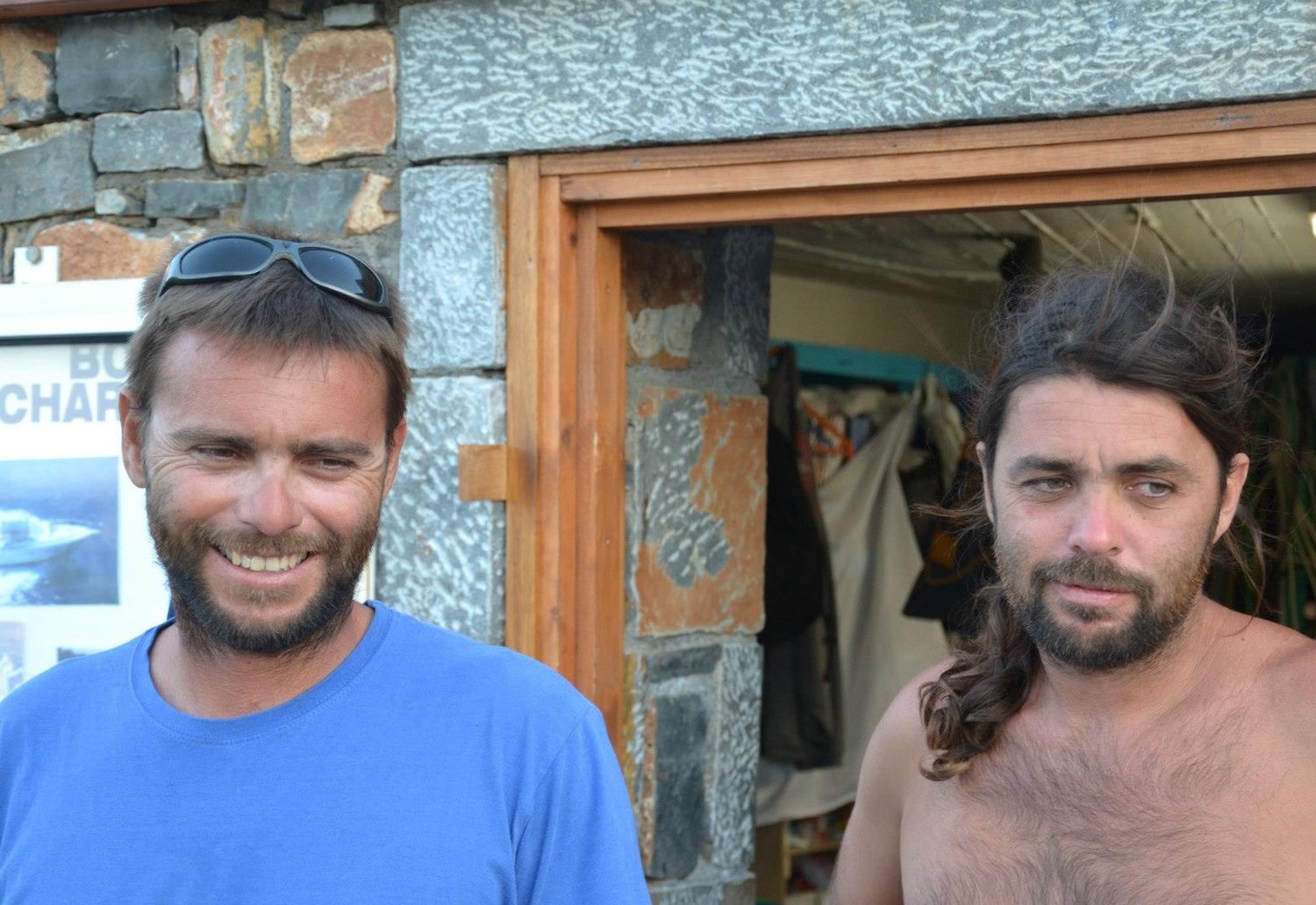
Tolis and Alex Evangelou, Watersports, Elounda Mare, since 1982.
Growing up here has been a true privilege. What began as meeting guests over the years turned into lifelong friendships, filled with unforgettable memories on land and at sea. We grew from babies into adults, while many of those we met became parents — and even grandparents — making this journey something we have shared together across generations, always connected by our love for the sea. We look forward to continuing to create these memories for many years to come.
The Chapel of the Prophet Elias, interiorThe Fassianos hagiography on the vaulted ceiling — the Ascension of the Prophet on the chariot of the Sun, blue rays radiating against the warm plaster. Iconostasis below.
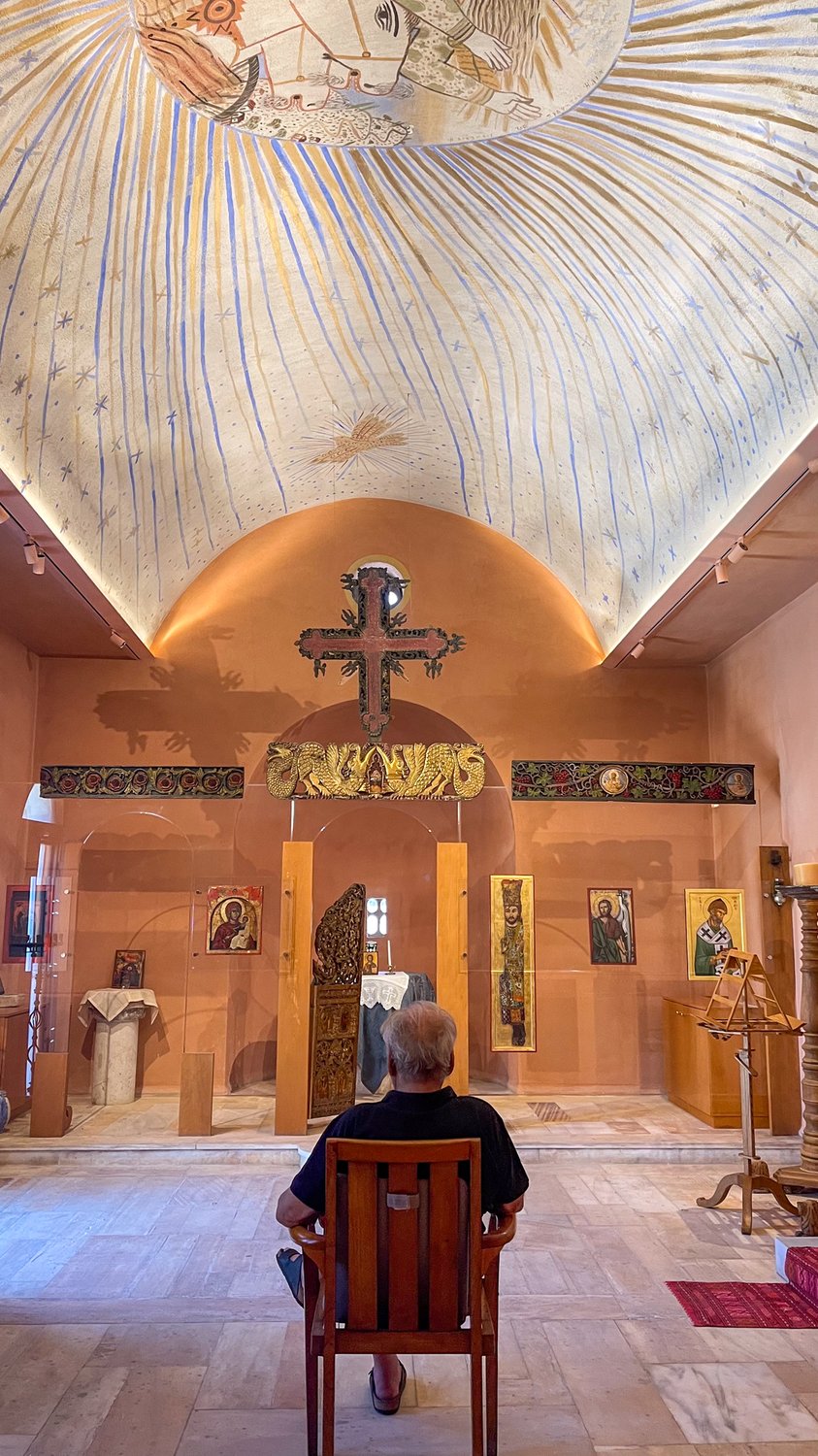
Spyros Kokotos in the Chapel of the Prophet Elias, Porto Elounda, c. 2010. Hagiography by Alekos Fassianos (1935–2022).
Porto Elounda
Golf & Spa Resort
Since 1992
Porto Elounda opened a decade after Mare, in 1992, on a larger stretch of the same coastline. It is the working heart of the Collection: a hundred and thirty-four units, multiple restaurants, the Six Senses Spa, the nine-hole par-three golf academy, and the conference facilities that make Porto the principal venue for corporate and group business. Where Mare is intimate, Porto is composed of many parts that must work together at scale.
That scale also makes Porto the property where most of the recent decarbonisation work has landed. In 2024 the seventy-kilowatt rooftop photovoltaic system came online, supplying renewable electricity through a net-metering arrangement. A new Daikin inverter chiller of five hundred kilowatts replaced two ageing reciprocating units, cutting cooling-circuit electricity use by between twenty and thirty-five percent. The most substantial single investment of the year, partially funded by the EU Recovery and Resilience Facility, was the renovation of the entire north wing: sixty-four rooms across six floors, fully insulated externally and brought under KNX building automation throughout. The savings will be measured in kilowatt-hours per year for decades to come.
In Porto's reception hall, and overhead in the two halls of the Nafsika restaurant, the carved wooden ceilings of northern Epirot tradition that Spyros gathered over a lifetime are installed, among the most distinctive interiors in the contemporary Greek hospitality sector.
We came as a family to Elounda, much like Spyros and Eliana did. My brother Yannis and I have been at Porto Elounda from its very first day of operation, and we have witnessed the creation of this jewel stone by stone and block by block. Working with the sea, not against it, using the natural currents and respecting the gorgeous rock formations, what stands out in our memory is how the environment looks more healthy and beautiful every year.
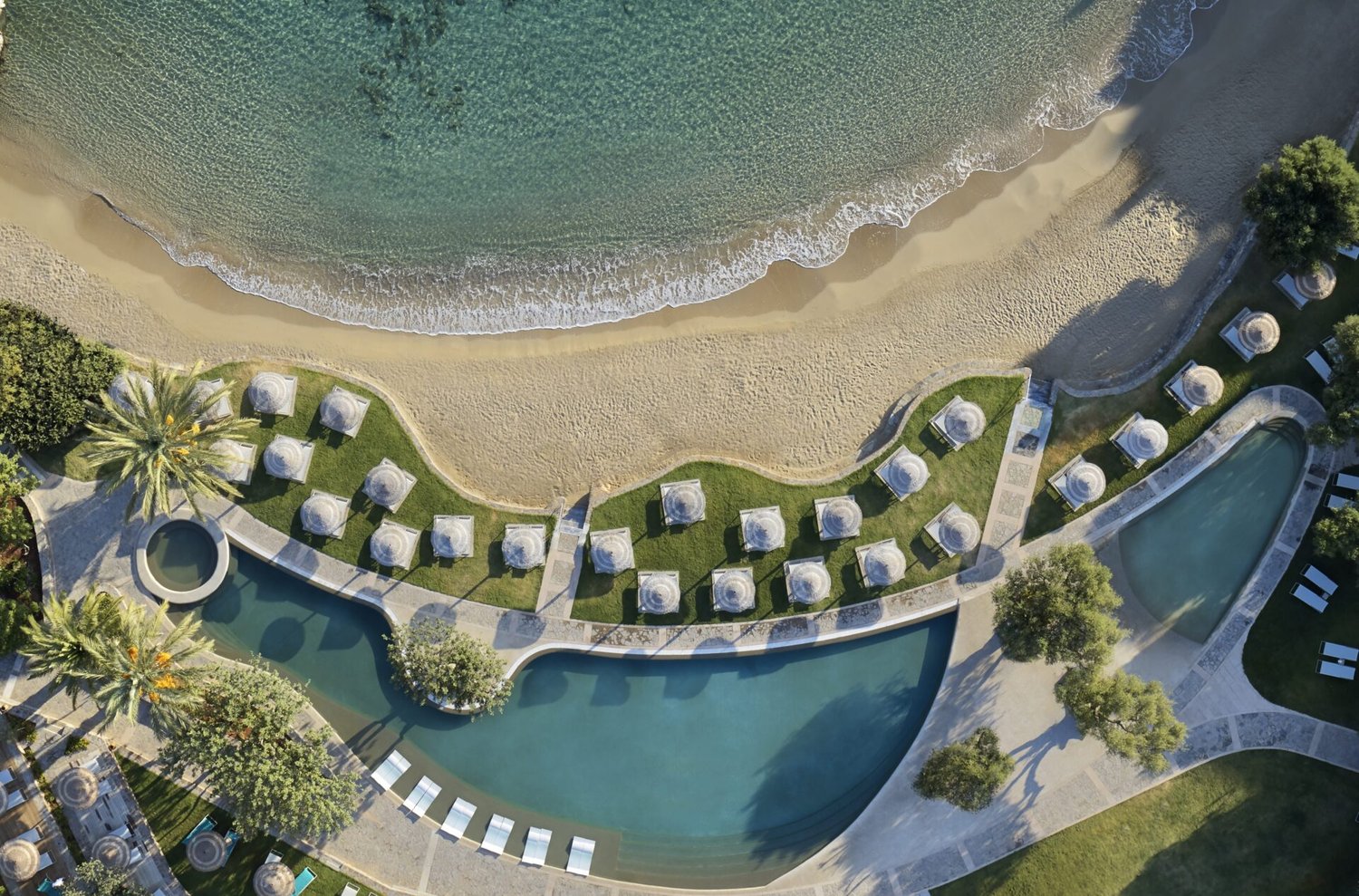
Porto Elounda from above — the curved seaside pool and beach.
There's an art to greeting guests who have been returning to Elounda every year for decades, and I have been here for so long that it has now become second nature. Luxury is subdued, not extravagant; hospitality is heartfelt, not ostentatious. Our guests enjoy a reserved character with a genuine smile, just knowing what the right drink is for every occasion.
Porto archival 1992Porto Elounda the year it opened. Aerial: main hotel block, the bungalows with their private pools at the water's edge, olive groves around. Period colour.
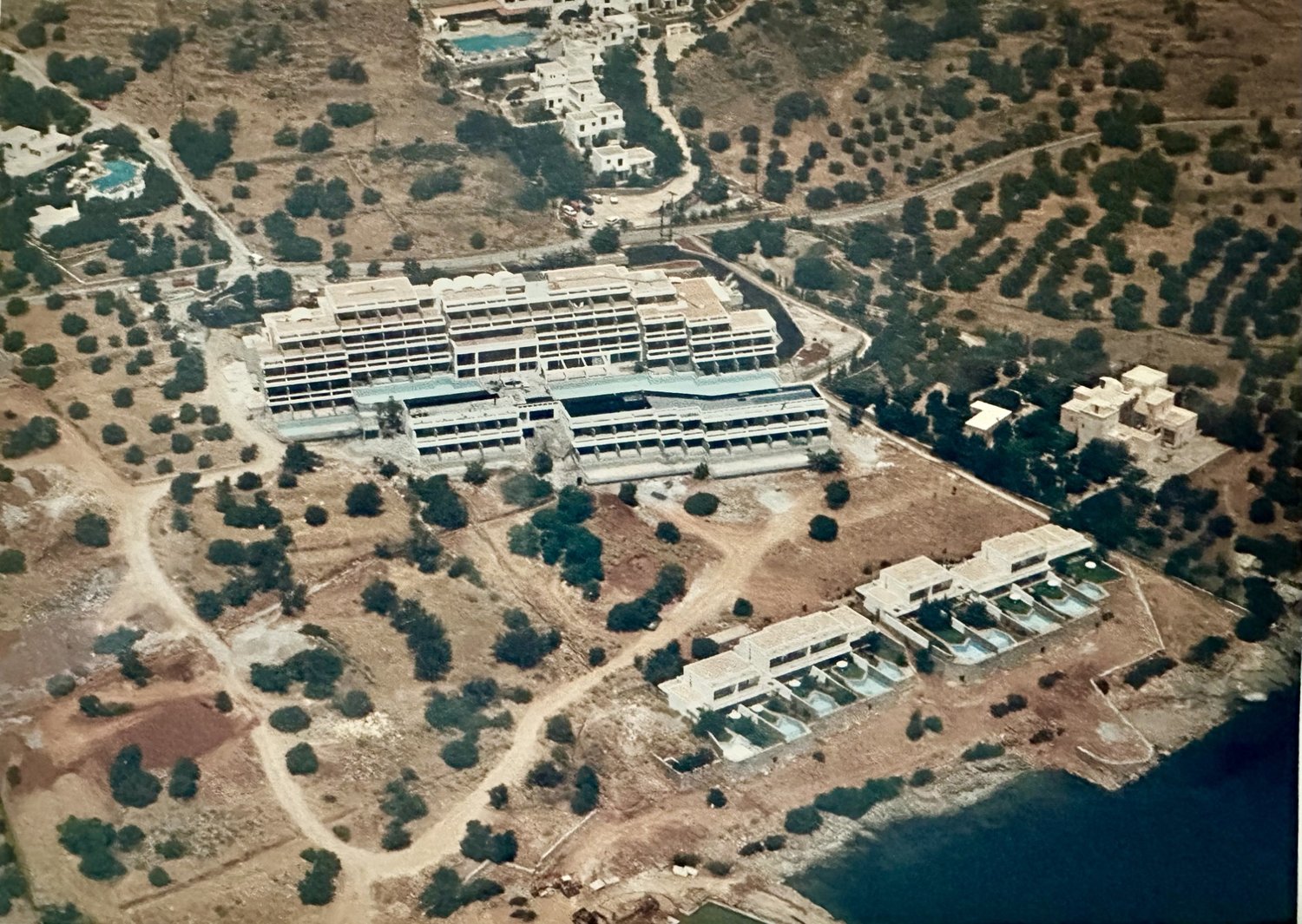
Porto Elounda, 1992 — its opening year. From the family archive.
Left page · full bleedStrongest options: (a) the property at the tip of its small peninsula, photographed from across the gulf at first or last light with Spinalonga in the distance; (b) interior of one of the suites; (c) the carved Epirot ceiling of the reception hall photographed from below in raking light, abstracted toward pattern — most distinctive single image the Collection could produce for this spread.
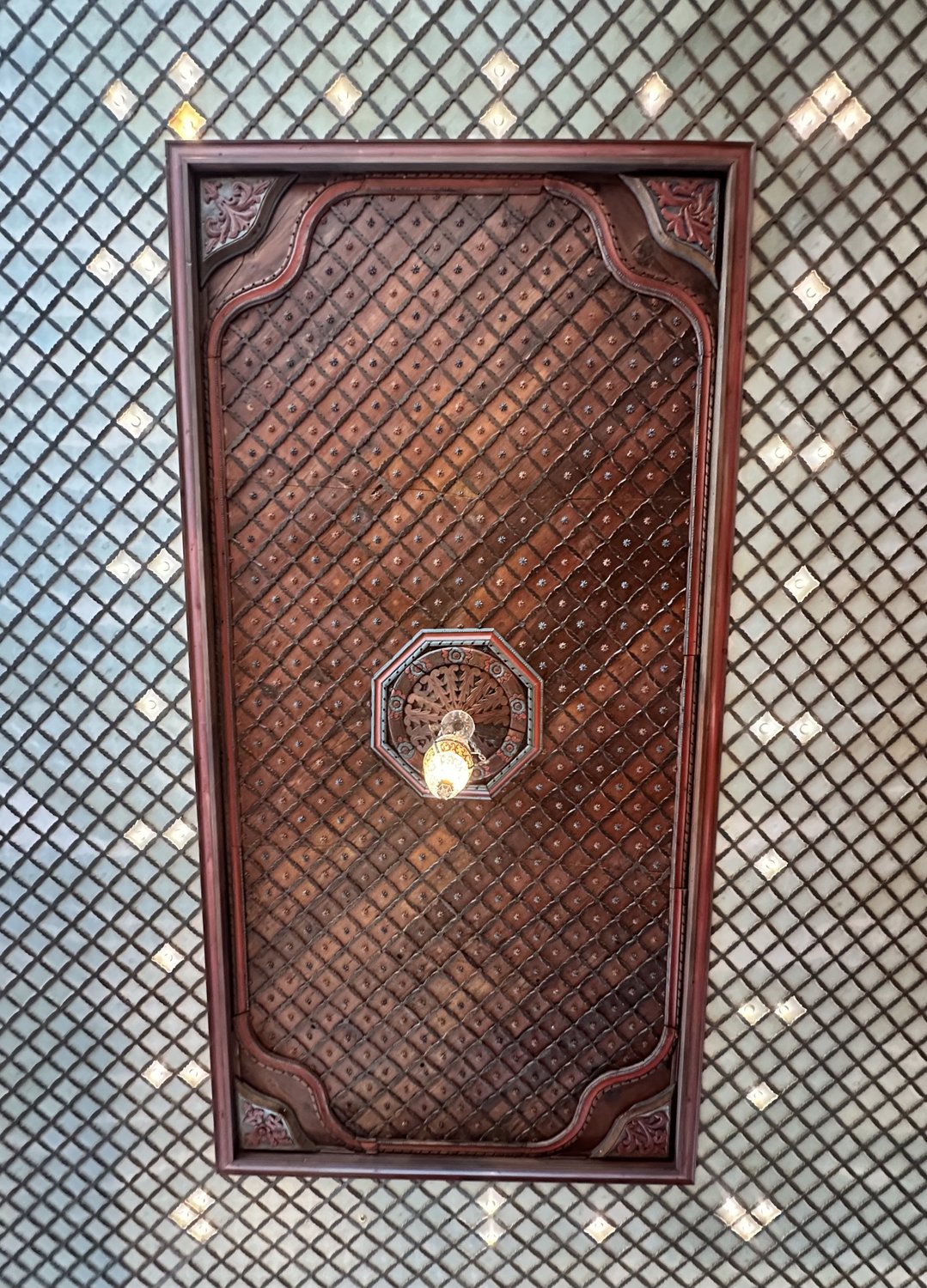
Carved wooden ceiling, reception hall, Elounda Peninsula. Originally from a village house in northern Epirus.
Elounda Peninsula
Luxury Resort
Since 2002
Elounda Peninsula Luxury Resort, the most recent of the three properties, opened in 2002. It is the smallest of the Collection — twenty-four suites only — and was conceived as a property of considered scale, where the ratio of space to occupant runs in the guest's favour, and where the design language is more refined and the service more individual than at Porto's larger complex. (The "Luxury Resort" suffix in the property name dates from 2025, replacing the earlier "All Suite Hotel" designation; the building is unchanged.)
Peninsula carries forward the Collection's architectural inheritance through its interiors. The reception hall and the two halls of the Calypso restaurant are crowned with the same carved Epirot ceilings found at Porto; large surfaces of worked wood, three centuries old in some cases, lifted from the ruined houses of villages in the north of Greece and re-installed here as a continuous dialogue between vernacular Greek craft and the rooms in which guests now eat and meet.
Of the three properties, Peninsula was the only one to grow in 2024 — guest-nights up by five and a half percent on the previous year, against a small overall decline at the Collection level. The property hosts one of the Collection's two dedicated wheelchair-accessible suites and operates a pontoon vessel with roll-on access, the foundation of a wider accessibility programme described in Tomorrow.
Voice portrait · Jean-Charles in 2003The young chef, just arrived. Whites, toque, the Peninsula bungalows and the gulf behind. Pairs with the quote about being chosen at nineteen.
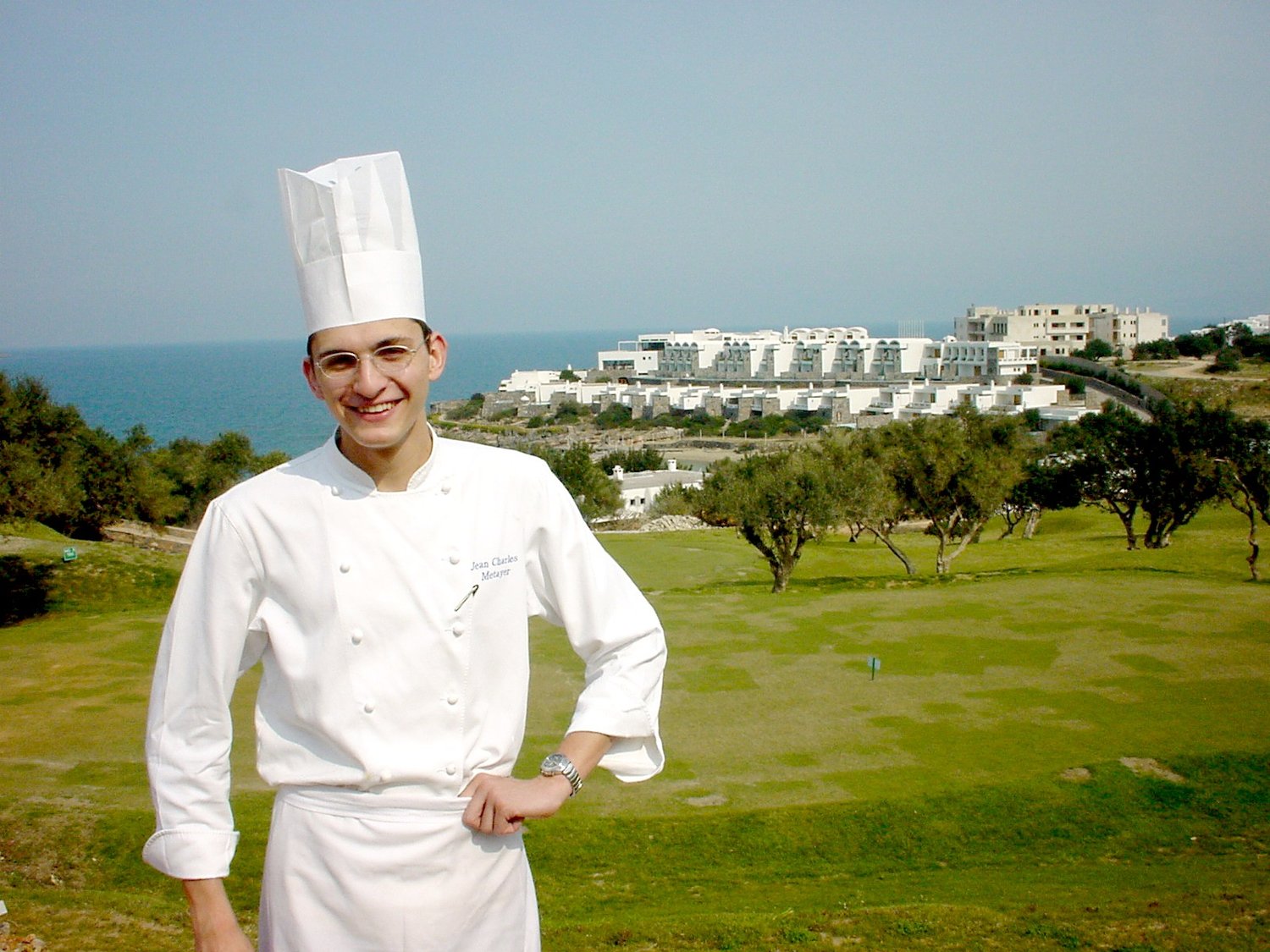
Jean-Charles Métayer at Peninsula, 2003 — his first year.
I was only nineteen when my mentor, the late great Jacques Le Divellec, chose me as his stand-in at the Elounda Peninsula, to be the executive chef at this genuine fine-dining establishment, the Calypso restaurant. The awards we won were certainly major recognitions of our work, but what fulfills me most is that the family of Spyros and Eliana Kokotos have embraced and nurtured a boy from western France to be a culinary director at their life's masterpiece.
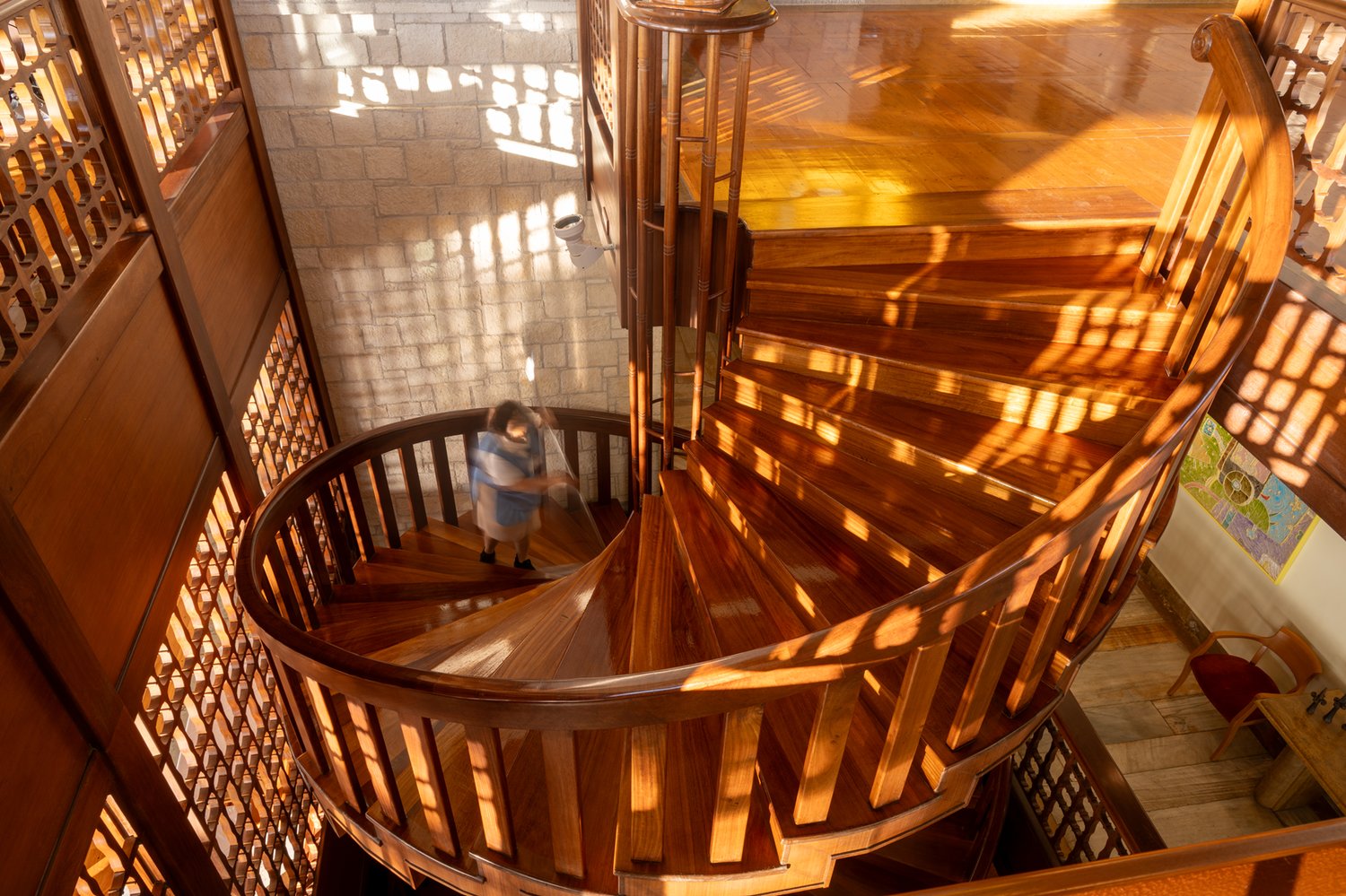
A spiral staircase at Elounda Peninsula — one of the recurring architectural signatures of Spyros Kokotos across the Collection.
Left page · full bleedStrongest options: (a) the Dafnes vineyards seen from a height in late afternoon light; (b) a working portrait of a Cretan supplier — a beekeeper, a fisherman, a cheesemaker, a vegetable grower; (c) a still life of in-season Cretan produce as it arrives at one of the property kitchens at first light.
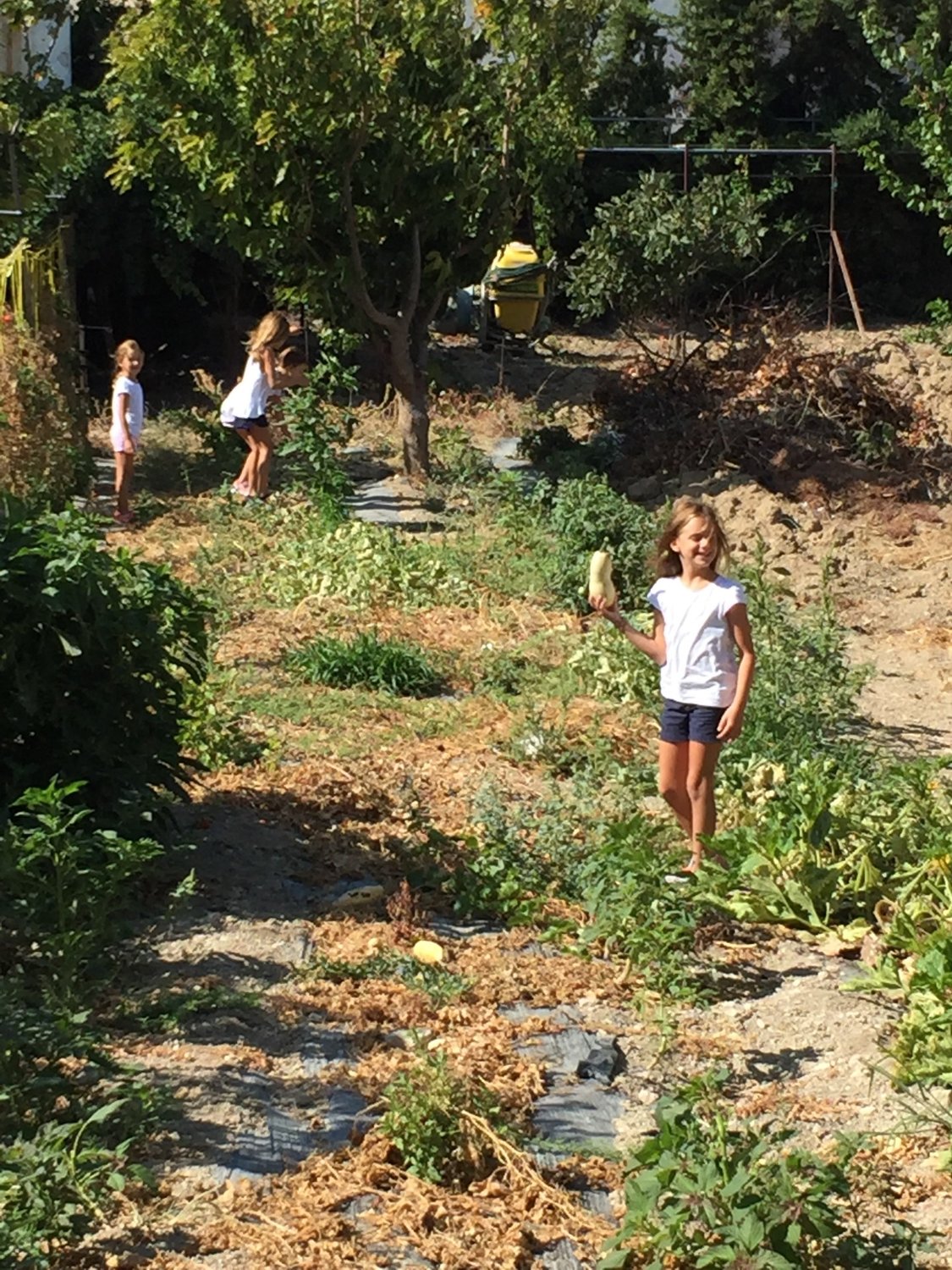
The vineyard and orchard at the ancestral Estate Varouhas in Dafnes is a source of organic produce for the hotels.
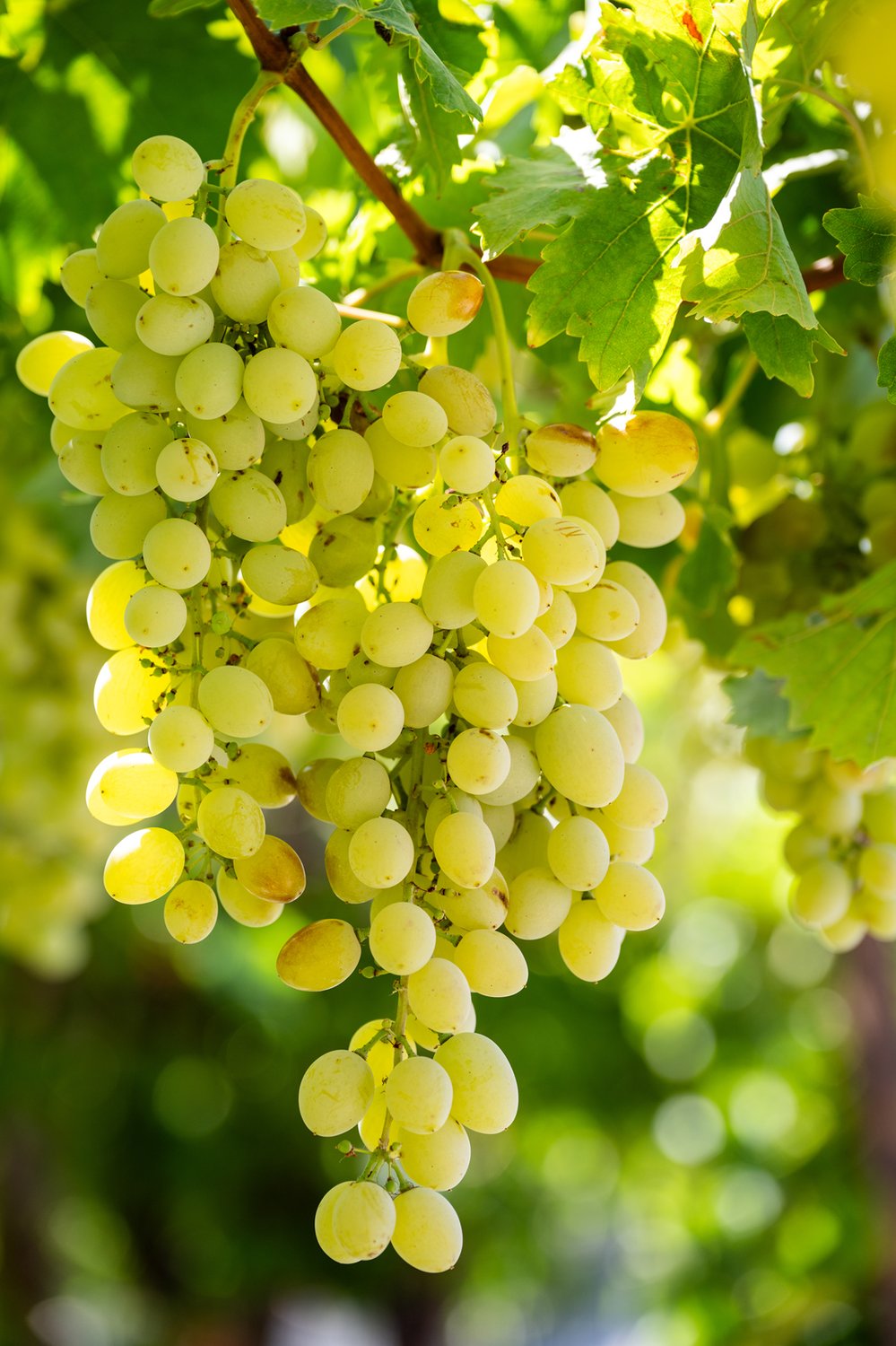
Syrah grapes ripening on the vine at the Varouhas Estate, Dafnes — fruit destined for the Estate Varouhas cuvée carried on the Collection's wine list.
Where the food
comes from
Crete is, in agricultural terms, an unusually self-sufficient island. The mountains hold sheep and goats, beekeepers, oil presses, vineyards. The plateau lands carry cereals, citrus, vegetables. The gulfs bring fish and shellfish. For a hotel kitchen working at the eastern end of the island, the question of where the food comes from has, for the most part, an answer ready at hand; provided someone takes the time to ask it.
Over many years of operation the Collection has built procurement relationships with local growers, dairies, butchers, fishermen and small producers across Lasithi and beyond. In the categories where local supply runs deep — fresh fruit, vegetables, dairy, seafood — most of what reaches the kitchens comes from Crete or, where Crete cannot supply it, from the Greek mainland. In other categories, particularly spirits, tea and coffee, the supply is necessarily international, as it is for kitchens everywhere at this scale.
What the Collection does not yet have is a measured account of these flows. The figures reported in 2024 are educated approximations from procurement and food-and-beverage management, not the product of systematic measurement supplier by supplier. This is a known limitation; the work to remediate it — invoice by invoice, line by line — has begun, and will be reflected in the 2026 reporting cycle.
One sourcing relationship deserves to be named in full. The wine list of all three properties carries Estate Varouhas, a cuvée produced by Kokotos Estate, founded by Spyros's brother Georgios Kokotos in Stamata, Attica, drawing on a family viticultural tradition rooted in the Dafnes vineyards of Heraklion. The wine is grown on the same slopes that surround the Foundation's Museum of Cretan Folk Art at the Varouhas Estate. Heritage and supply, in this one bottle, are the same line.
Voice portrait · Georgios KokotosSpyros's brother, founder of Kokotos Estate at Stamata; producer of the Estate Varouhas cuvée from the Dafnes vineyards.
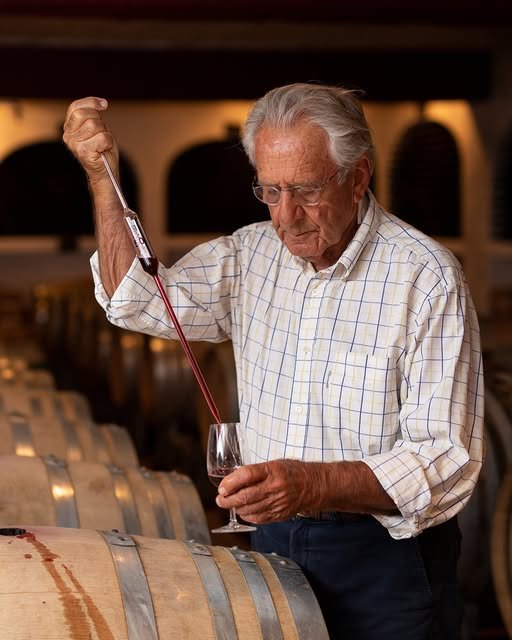
Georgios Kokotos at Kokotos Estate, Stamata.
Wine is a hobby and a passion for this engineer here. Spyros and I, we spent our lives building hotels and sailing the seas, but returning to our ancestral home in Dafnes and rebuilding it from its ruins into a magical winery and an estate that adorns our village; that has probably been the culmination of our careers. Producing the Varouhas Estate from our Dafnes vineyard is a singular pleasure, and watching the hotels' guests enjoy it is even more so.
Left page · full bleedStrongest options: (a) wide of the Mare reverse-osmosis desalination plant interior — membrane racks, piping, working scale; (b) closer detail — seawater intake, pressure gauge, inverter pump — abstracted toward pattern; (c) the irrigation of the resort gardens at first light.
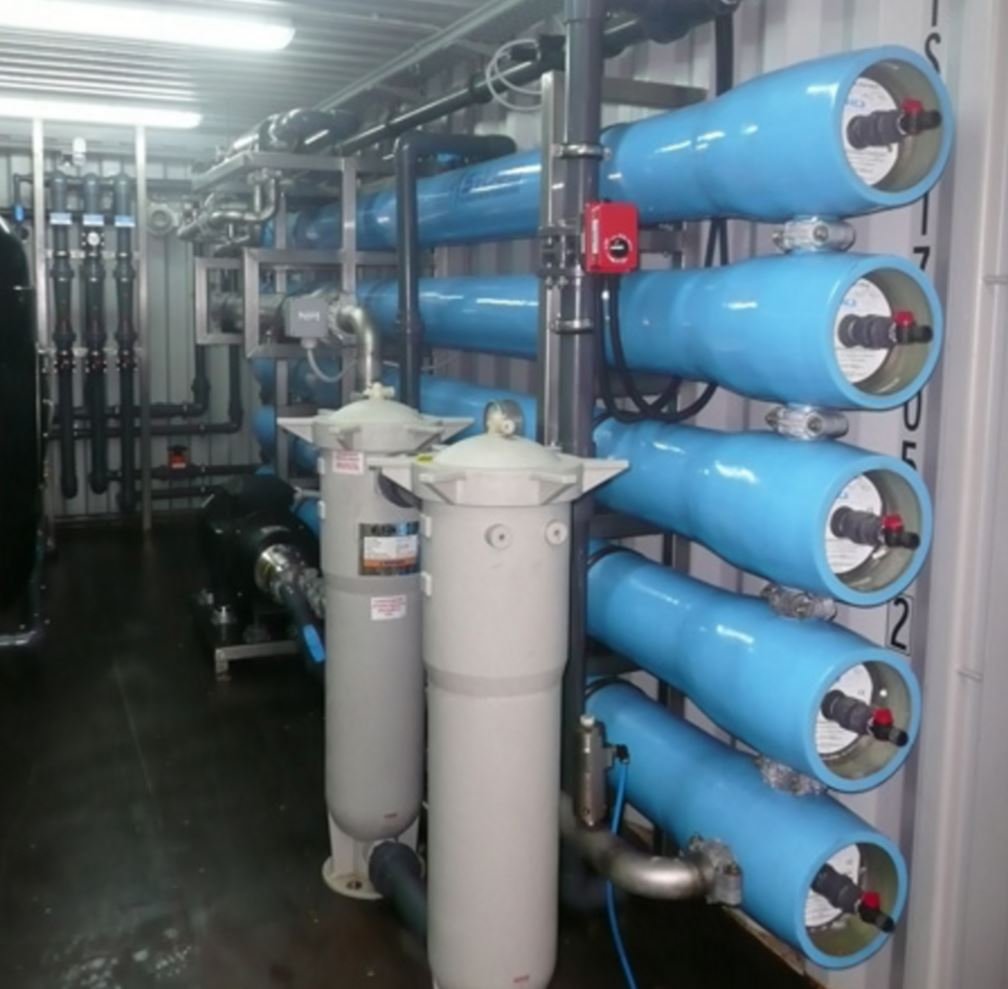
Reverse-osmosis desalination plant, Elounda Mare, 2024. The Collection produces all of its guest-facing freshwater from seawater across three such installations.
Water on a
thirsty island
Eastern Crete is, by Mediterranean standards, a thirsty place. The aquifers of Lasithi face seasonal pressure from agriculture, residential use, and tourism, and the municipal water utility has been managing constrained supply during peak summer months for many years. Building three luxury hotel properties along this coastline therefore meant solving the water problem at the property line, before any guest arrived.
The Collection runs entirely on water it produces from the sea. Three reverse-osmosis desalination units serve the three properties: a unit at Mare producing some sixty-one thousand cubic metres in 2024, a unit at Porto producing thirteen thousand, and a third — operated by the technology partner SYCHEM Water & Energy under a water-as-a-service arrangement — producing forty-eight thousand. Together, the three units met one hundred percent of the freshwater demand of the hotels. The only municipal water consumed during the year was at the staff residential block; three and a half thousand cubic metres, or 2.8 percent of the total. By converting seawater into the working water of the Collection, the company removes itself from competition for the municipality's stressed supply.
Wastewater is treated on site in a biological treatment plant operated year-round, and is reused for irrigation of the resort's extensive landscaped gardens; a closed loop that returns no effluent to the gulf during the operating season.
When Elounda Collection and the family of Spyros and Eliana relied on us for a radical transformation of their energy and water infrastructure, I had only started out as Engineer a few years ago. Year by year, we have worked together in good and difficult times and Elounda Collection became a paradigm of energy saving and water management with cutting-edge technologies and hybrid systems of sea water geo-exchange, heat recovery, desalination and solar power. Decades later, expanding our cooperation in the field of organic waste management and watching their son Fotis, a friend and passionate comrade in the quest for environmental stewardship, produce their first such report, well that fills me with joy. There's so much more to do, of course, and I look forward to the decades ahead!
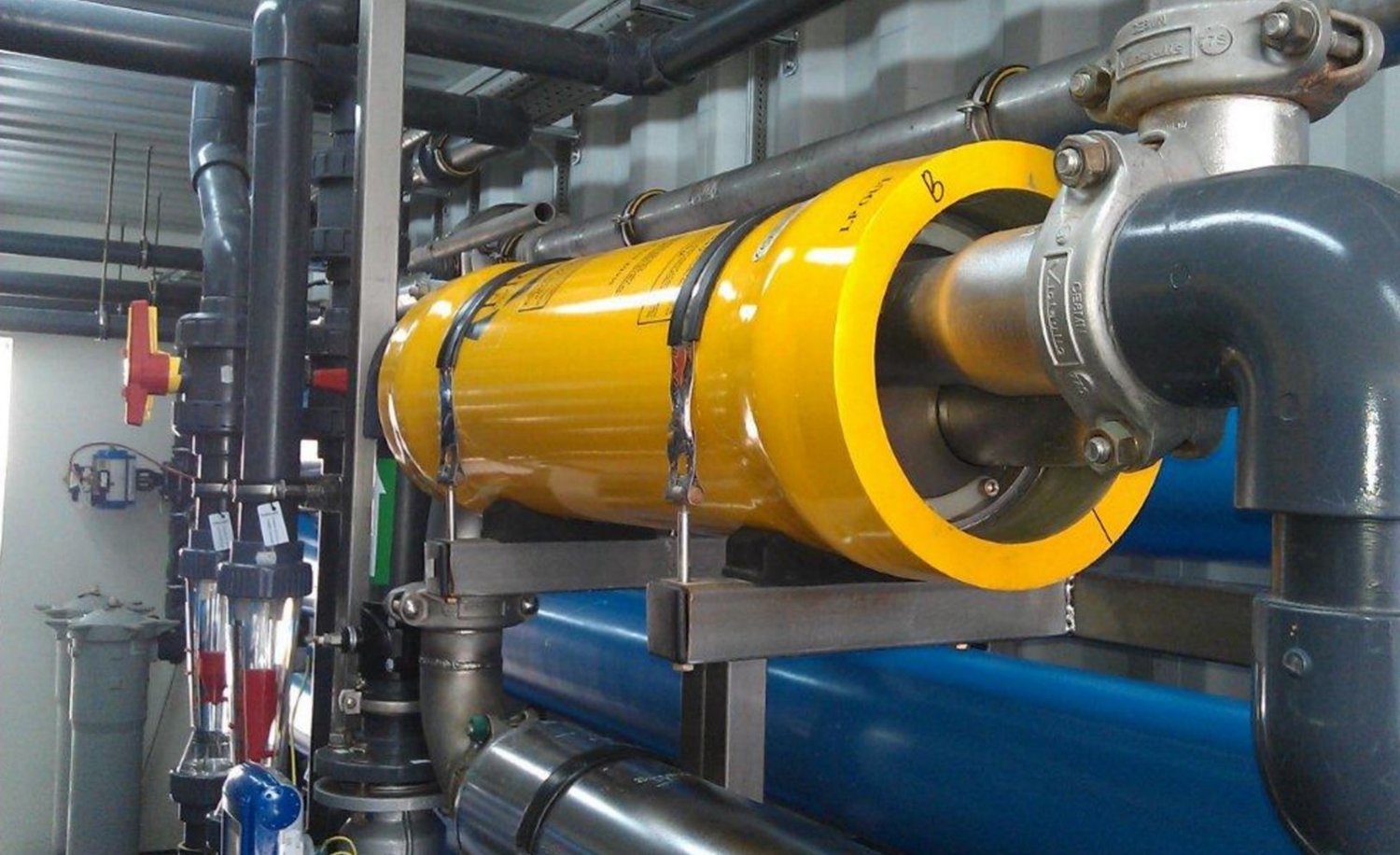
The ERI pressure exchange mechanism reduces energy consumption by 90%, solving the carbon-footprint issue of seawater desalination.
People · long-tenured working portraitEleni Neophytou at the Mare reception, where she has worked since the property opened in 1982. The portrait stands for the unusual depth of tenure described in the spread.
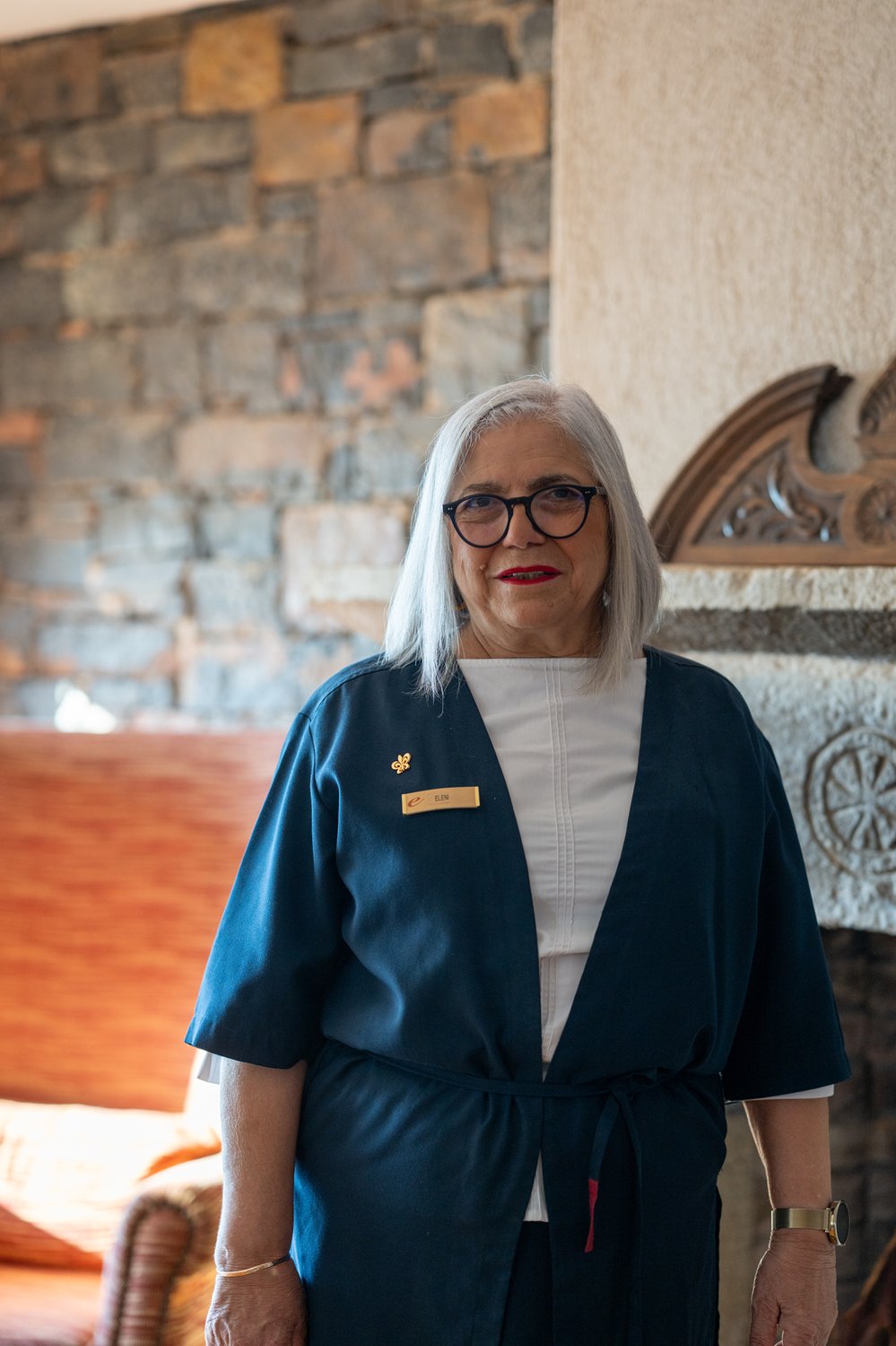
Eleni Neophytou — Reception, Elounda Mare, since 1982.
People
Of the many hundreds of people who keep the Collection running through the year, two facts are most worth naming.
The first is the seasonal rhythm. The Greek tourism industry runs on a working calendar that opens at the start of April and closes at the end of October; for that period the Collection employs around three hundred and ten people — full-time, part-time, line-staff and management — at the three properties. The other half of the year is the construction and renewal season, when the buildings are closed to guests and the contractor crews are on site. For the family and the senior team, the work is continuous; for the larger workforce, the seasonal pattern means many people return year after year, and many trades return for the winter work.
The second is the unusual depth of tenure. Across the Collection, dozens of staff have been in the same role for decades; some, as named in the property portraits earlier in this report, since the day their property opened. This continuity is not a coincidence. It is the result of a deliberate management choice to invest in people across multiple seasons, to create long-term roles where the industry tends toward casual labour, and to compensate fairly within a working calendar that, for many, has become a life.
In the figures, the 2024 workforce was 47 percent women and 53 percent men, with 84 percent Greek nationals. Permanent contracts represented 14 percent of the total; the remainder were seasonal contracts of varying lengths. Diversity, equity and inclusion training, and an expanded accessibility programme across the three properties — both initiated in 2024, both expanding in 2025 and 2026 — are described in Tomorrow.
Beyond the boundary of the Collection, the company has engaged for decades with the institutional architecture of Greek tourism. Spyros Kokotos's role in the founding of SETE is described in Heritage. That commitment continues today: Fotis Kokotos served as Deputy Secretary General of SETE, is a leader in the Lasithi Hoteliers Association, and presides over ReHORECA Sustainability System AMKE, a non-profit zero-waste hospitality network set to expand internationally. In each of these roles, the same principle applies: the work of keeping a place sustainable cannot be done by a single hotel alone. It requires the sector to act together.
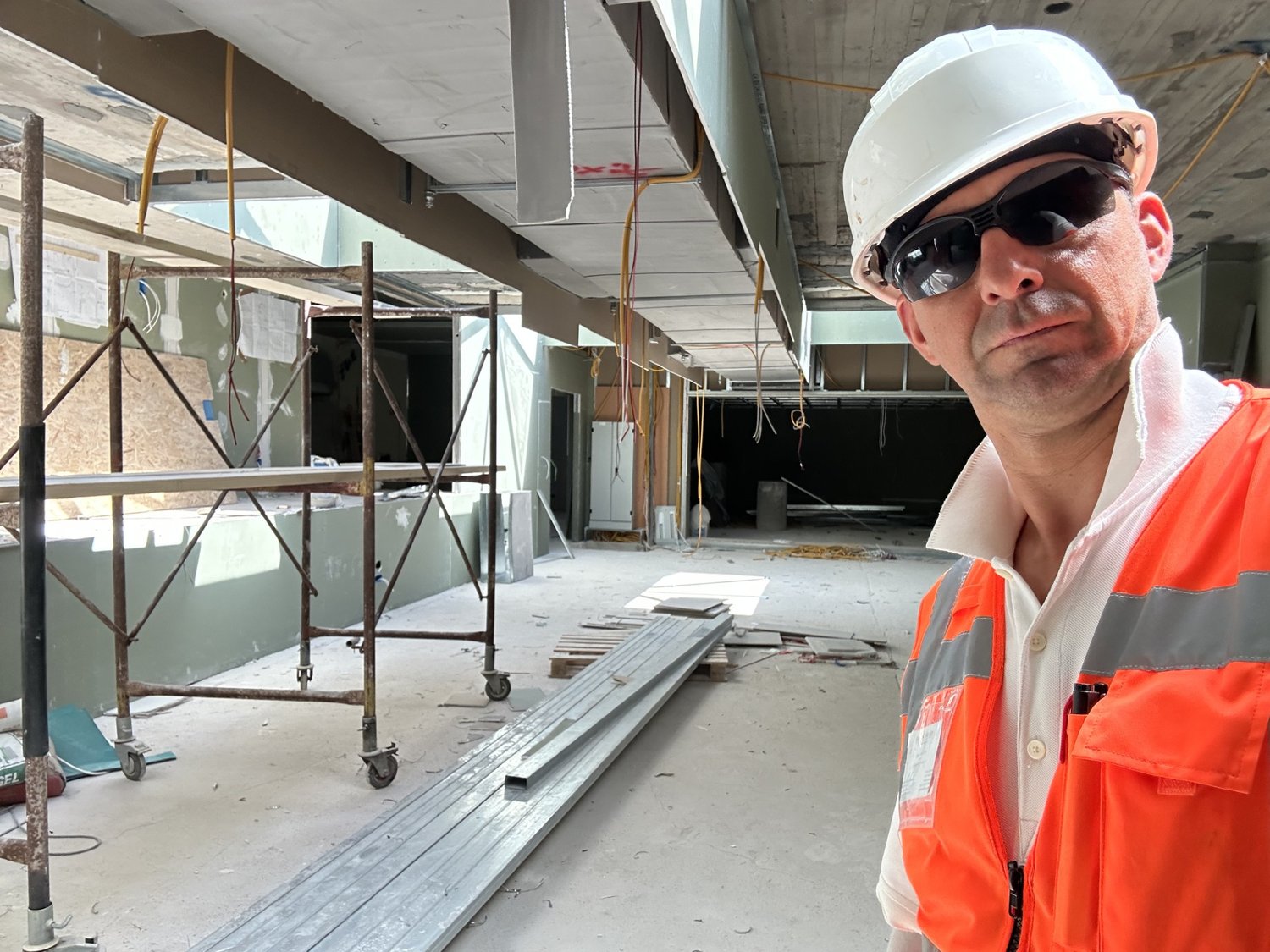
Left page · full bleedImage of forward motion or work in progress. Strongest options: (a) winter construction — scaffolding, a renovation in progress, the closed season at one of the properties; (b) a younger employee being trained at a working station; (c) the gulf at dusk, looking forward in time; (d) the Dafnes vineyards in spring, just before bud-break.
Commitments to 2030
The targets below are public undertakings of the Elounda Collection. Each is dated and falls within the operational responsibility of the Company. The Sustainable Development Directorate is responsible for delivering them and for reporting progress in each annual ESG cycle, beginning with the 2025 reporting year.
2026
2027
2027
By Fotis Kokotos
This is the first time the Elounda Collection has produced a report of this kind for the public.
It has been a year of intense work; from the verification of the underlying data through the METRON Sustainable Tourism platform, to the hundreds of decisions about what to include and what to leave for future cycles, to the careful editing that has tried to keep this document honest about both what we have done and what we have not yet done.
What I have learned from the process is that the easier work, in 2024, was the operational sustainability; the desalination, the photovoltaics, the chiller replacement, the waste streams, the building envelopes. These are decisions an engineer can recommend and a finance director can sign off on. The harder work is the work that follows from this report: the commitments in Tomorrow, set in writing for our guests and our partners and the people of Crete to read.
I sign this report not as the architect of its commitments — those belong to my mother, the Board, and the family as a whole — but as the engineer responsible for keeping our promises to it. The numbers will be measured again in the 2025 cycle, and the year after, and the year after that. I expect to be held to them.
ΤΟΥΡΙΣΤΙΚΕΣ ΚΑΙ ΞΕΝΟΔΟΧΕΙΑΚΕΣ ΕΠΙΧΕΙΡΗΣΕΙΣ ΕΛΟΥΝΤΑ ΑΕ
Closing reflection · right columnSculptural arrangement of millstones by Spyros Kokotos at Elounda Peninsula's Elies restaurant. Architectural-detail register, raking light preferred.
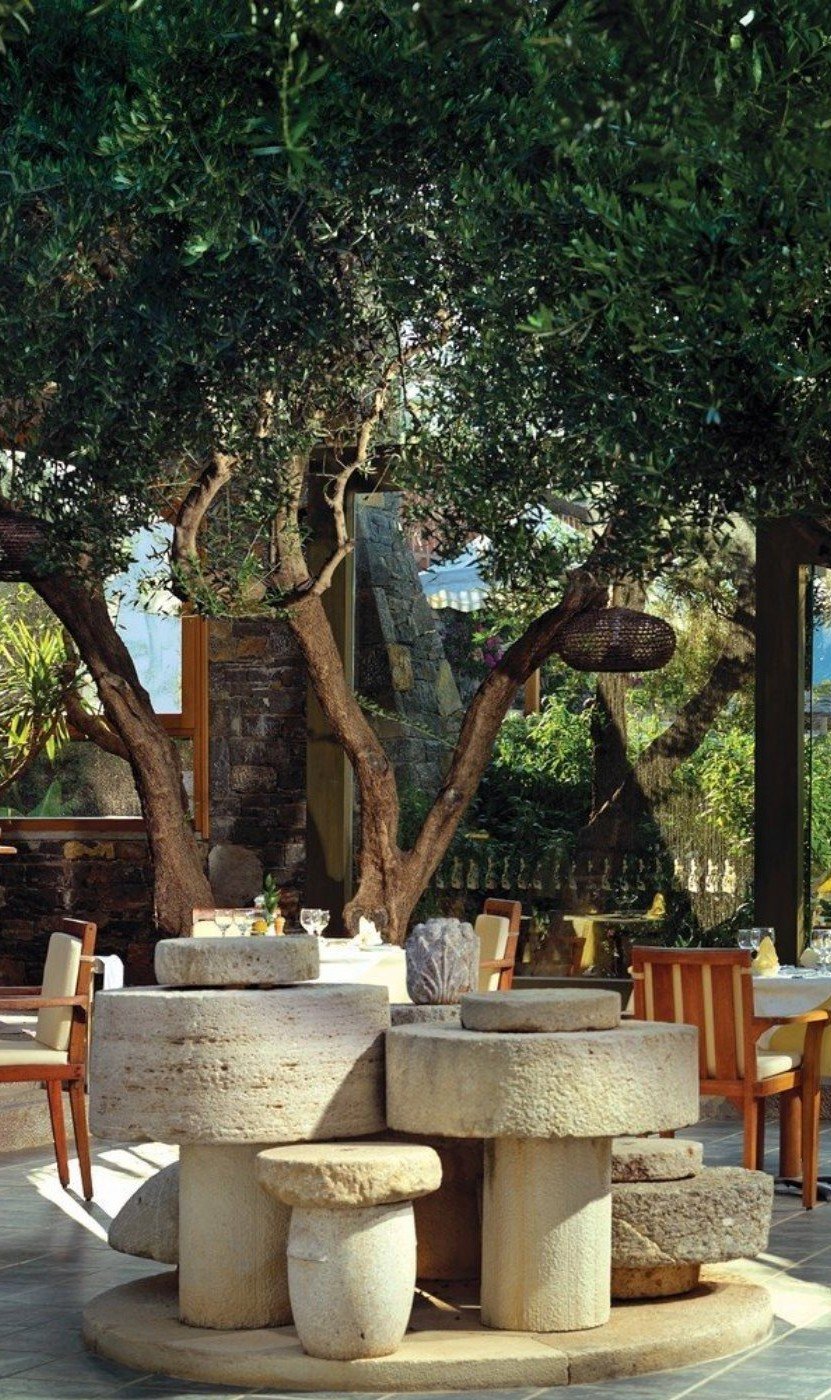
A sculptural arrangement of millstones by Spyros Kokotos, the centrepiece of Elounda Peninsula's Elies restaurant.
How we report
This publication, Stewardship, is the public-facing edition of the Elounda Collection Sustainability Report 2024.
The underlying data, methodology, and full disclosure are set out in the Company's corporate ESG Report 2024, which has been prepared as a voluntary early adoption of the Corporate Sustainability Reporting Directive (CSRD), following the European Sustainability Reporting Standards (ESRS) issued by EFRAG. That document covers the calendar year 2024 across all three properties — Elounda Mare Hotel, Porto Elounda Golf & Spa Resort, and Elounda Peninsula Luxury Resort — together with the associated residences, staff accommodation and supporting infrastructure.
The data underlying both reports were assessed through the METRON Sustainable Tourism platform (powered by SETE, the Greek Tourism Confederation) and verified by TÜV AUSTRIA Hellas, achieving an overall ESG score of 87.1 percent. The METRON verification was completed on 17 March 2026 and covers the 2024 reporting year. Where the Company's own detailed calculations have produced more accurate figures than those entered in the METRON platform, the revised figures are used, and the discrepancy is disclosed in the corporate report.
This public edition condenses, edits and re-frames the corporate report's content for general readers; in any case of conflict between the two, the corporate report is the authoritative document.
The full corporate ESG Report 2024 is available at www.elounda-sa.com/sustainability.
For questions regarding either report, please contact the Director of Sustainable Development at Elounda SA: esg@elounda-sa.com.